

Cornbread the Legend. Graffiti in Philadelphia, 1965 – 1971
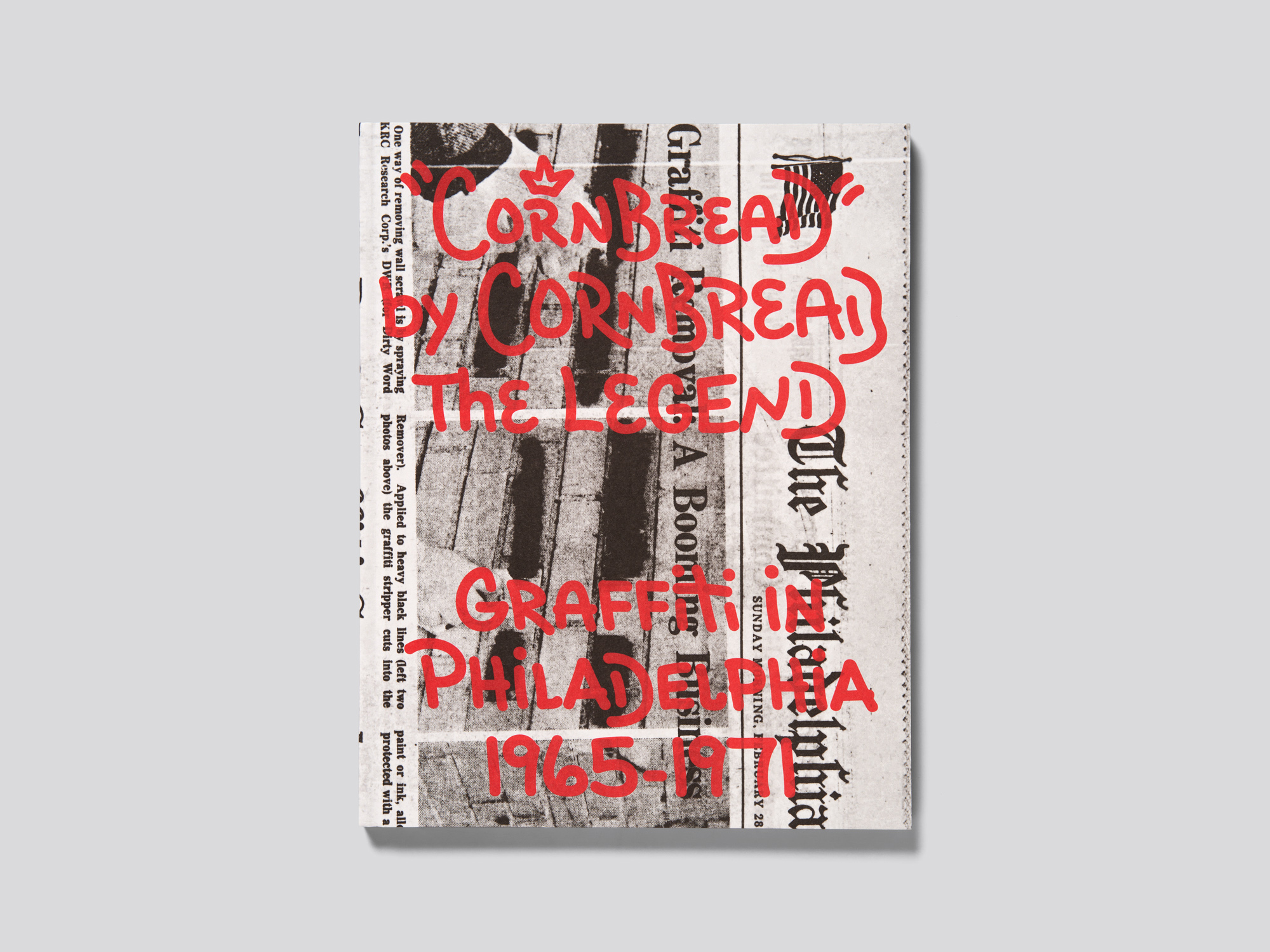
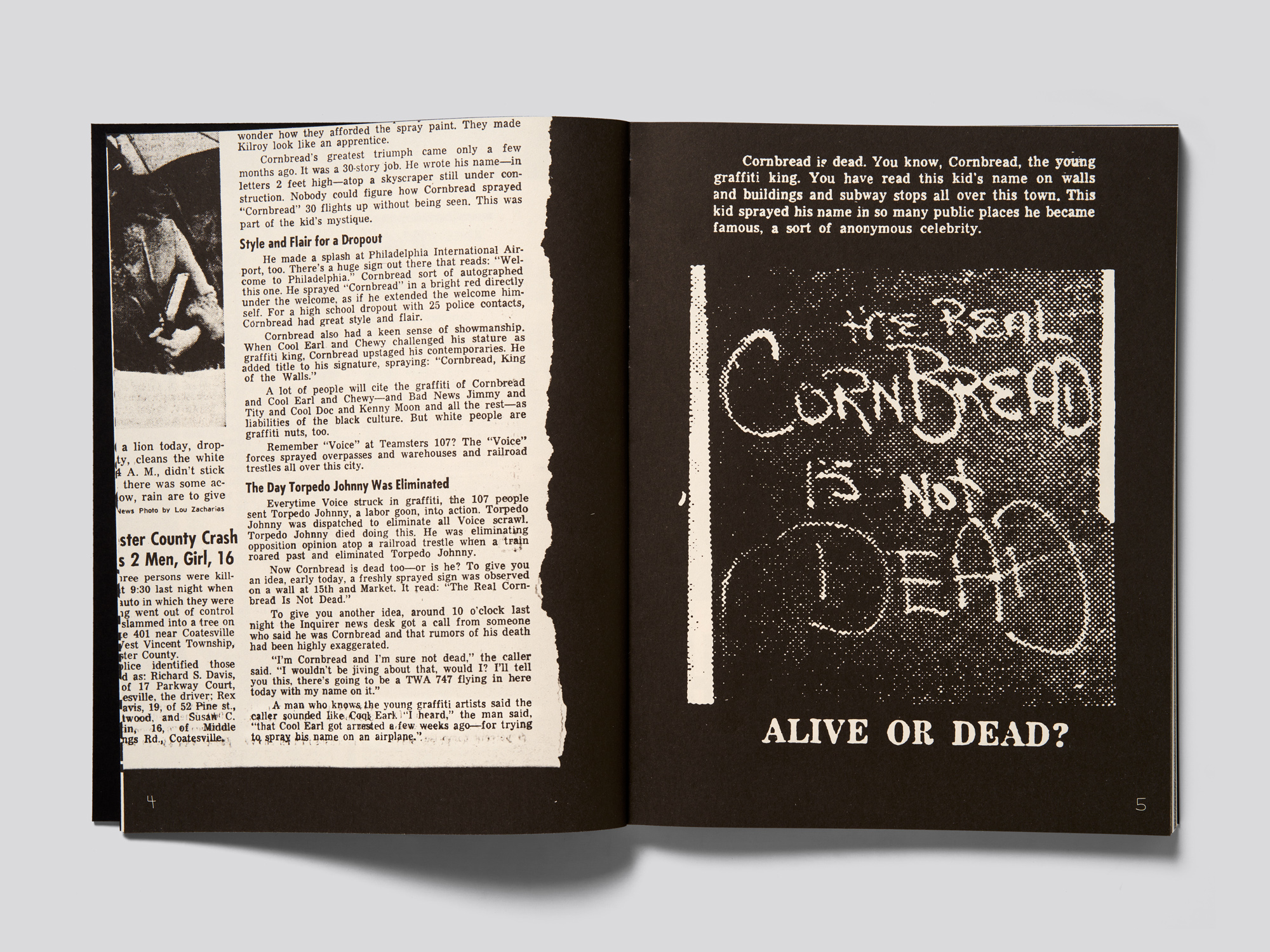
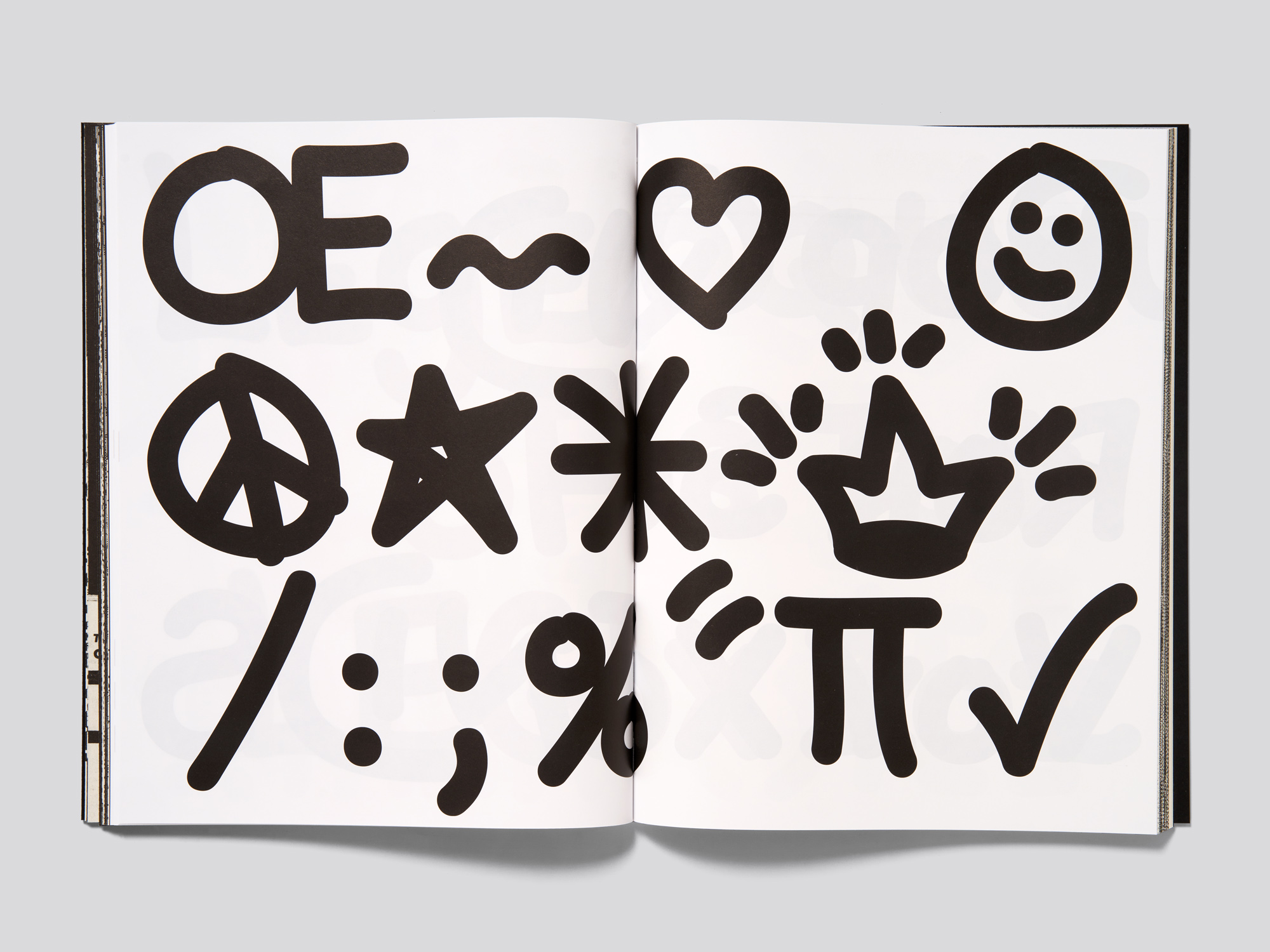
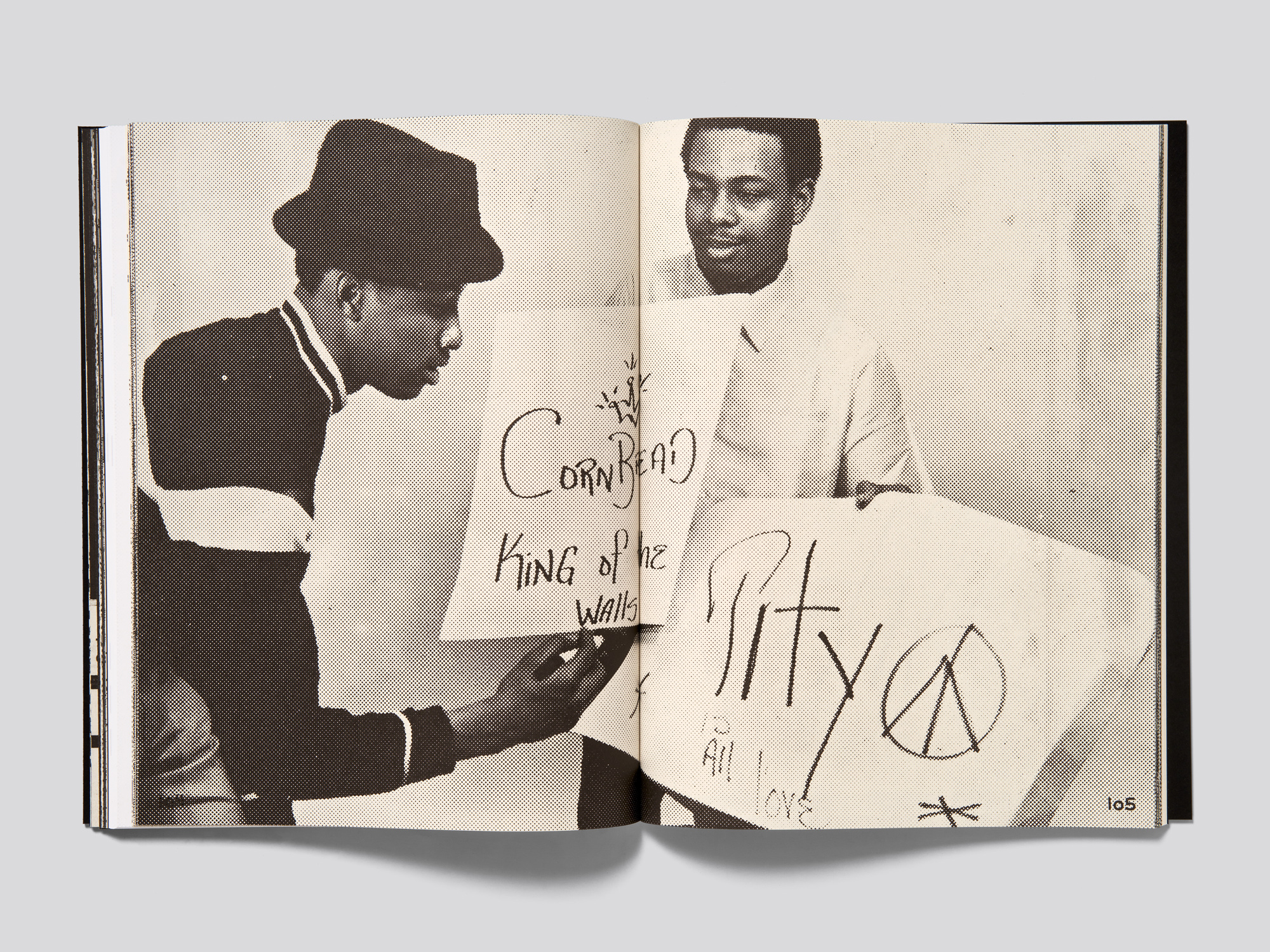
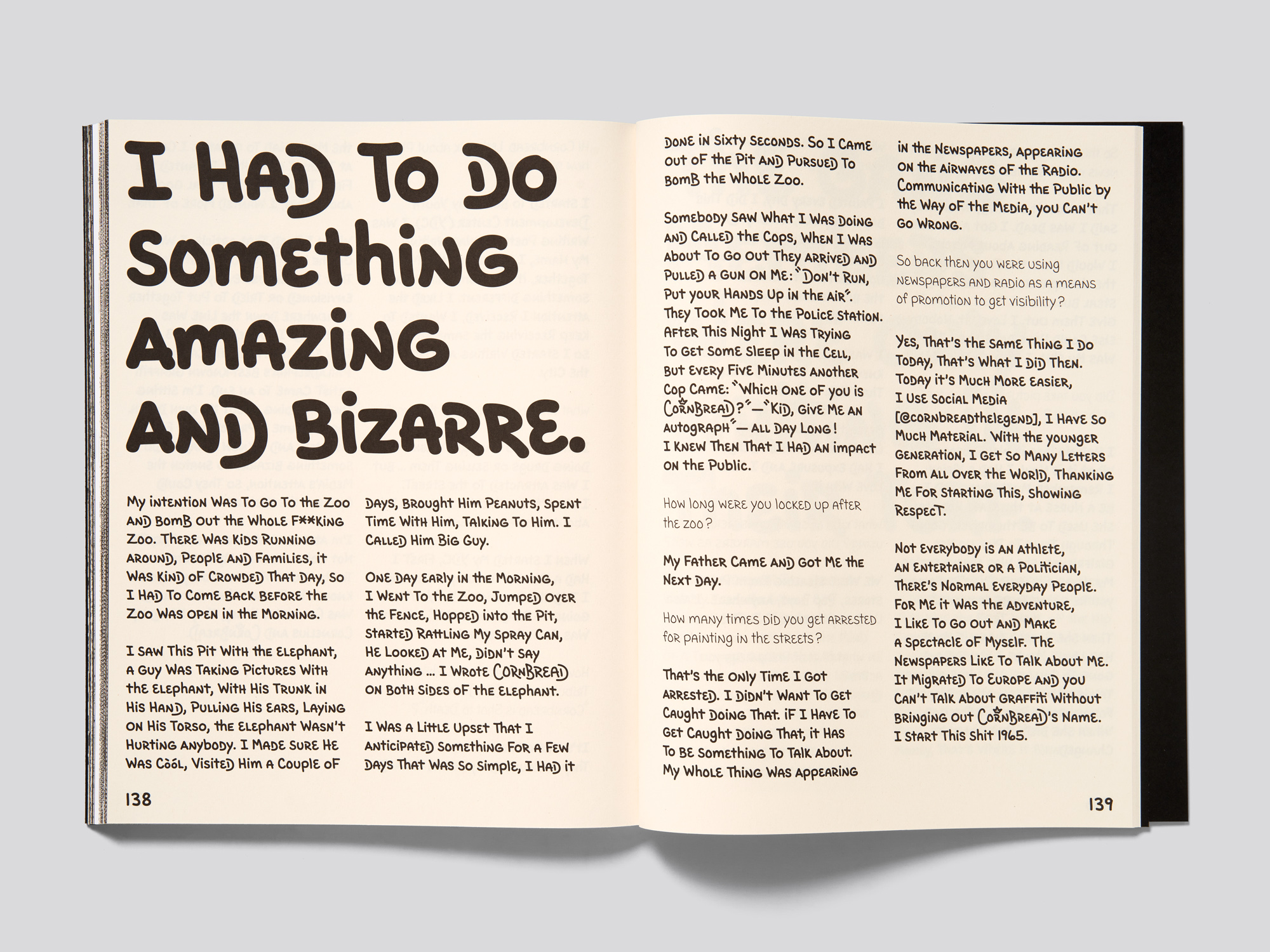
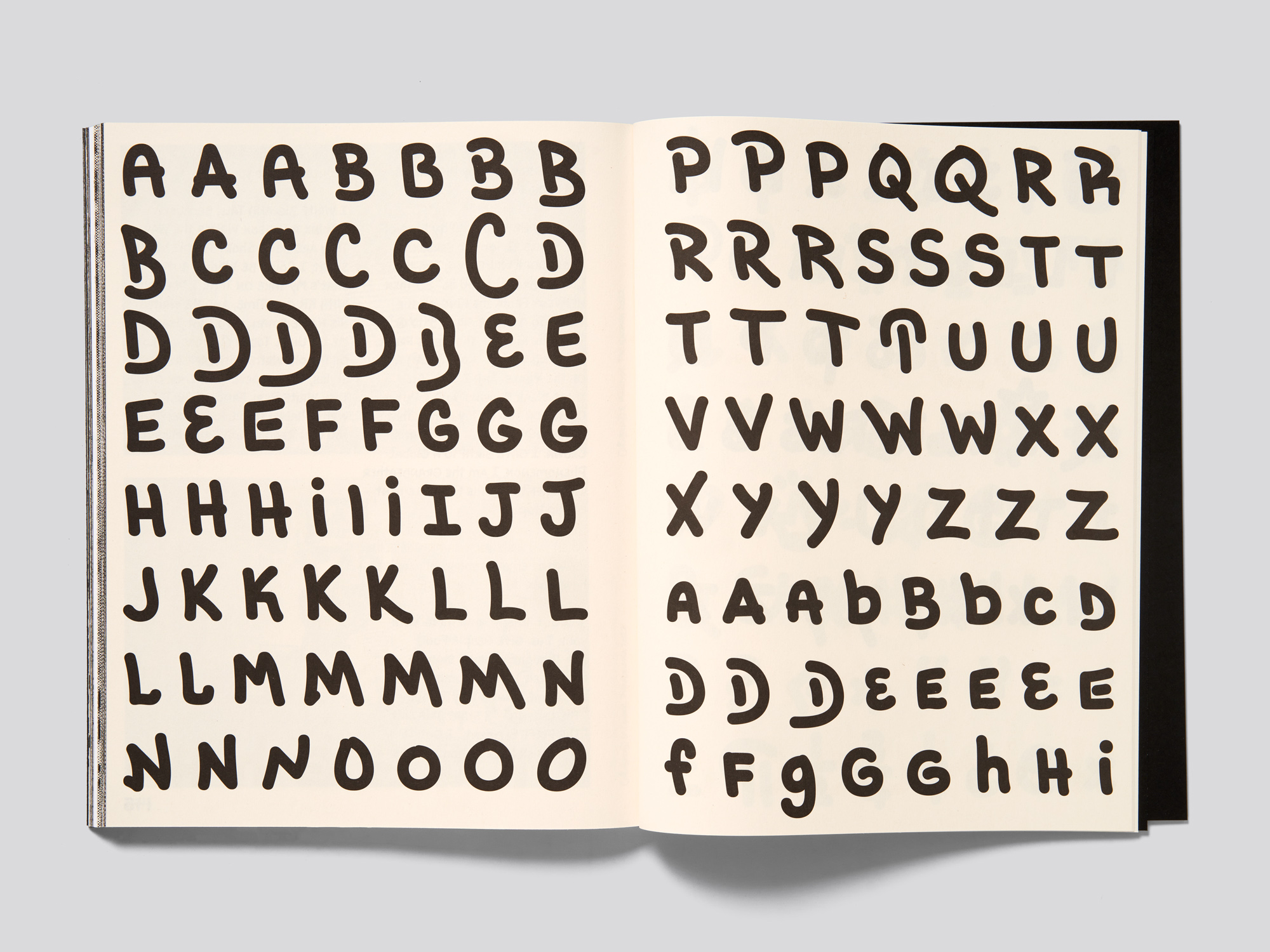
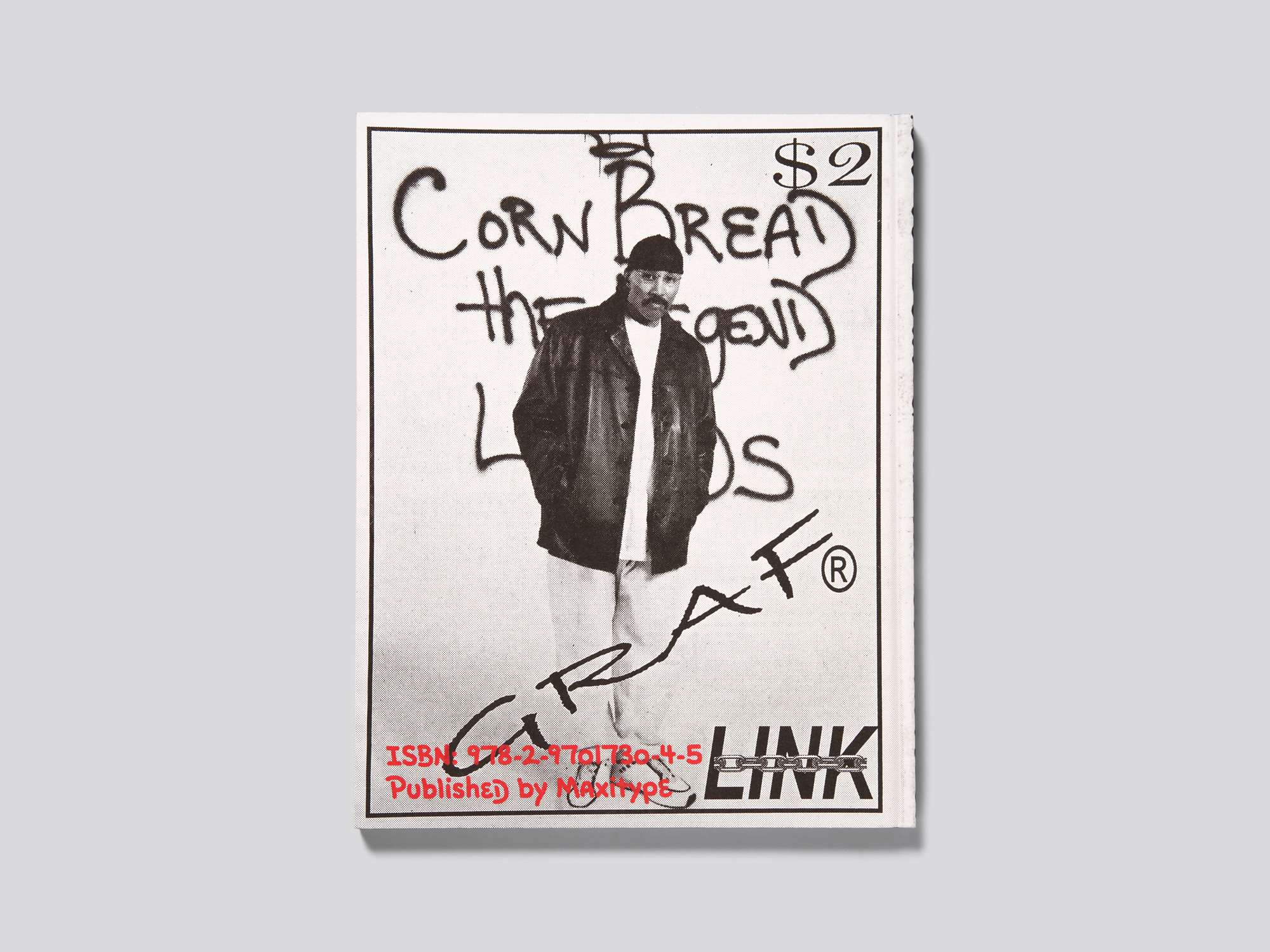
This mostly black-and-white specimen book for a new typeface created by a US graffiti pioneer tempts the reader with illuminating background information, going back in time from the digital age to the 1960s. It starts with a long sequence of images of photocopied – and sometimes enlarged – newspaper cuttings that reconstruct the public perception of the Philadelphia graffiti artist at that time. He was one of the first to turn the repeated spraying of a tag throughout a city into a form of artistic expression in public space, and, as a mysterious local celebrity, he was once falsely declared dead by the newspapers. The gripping visual story does not suggest a type specimen book, which is why the many subsequent white pages filled with large black letters and words in a single weight of the typeface initially come as a surprise. But it makes total sense to expand the specimen book in this way, especially when the typeface was so closely tied to the biographical and local context. This is then underscored by a second picture section with full-bleed historical photos of spray-painted graffiti and occasional portraits, mostly coarsely rasterised, and an illustrated conversation between the editors and the artist. Although this kind of photocopied aesthetic is not always easy to manage, here it is expertly handled and quite natural. The thick cardboard cover with unfinished edges gives the book a strong object-like feel – almost like a piece of wall. The cover featuring a historical newspaper report on graffiti removal overprinted with the book’s title in red suggests that the artist has prevailed in the face of all resistance. Overall, the publication contributes to raising awareness of the cultural, historical and political background of a graffiti-inspired typeface that, for a younger audience in today’s world of myriad digital fonts, might seem out of time and place.