

Bruno Monguzzi
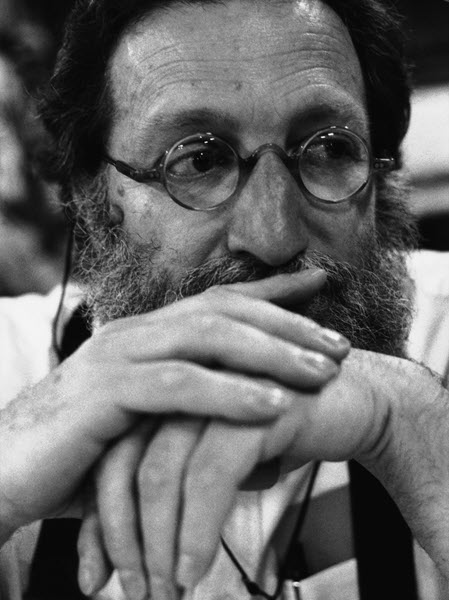
Bruno Monguzzi
Substance meets poetry
by Susanna Koeberle
Born in Mendrisio, Ticino in 1941, Bruno Monguzzi is not a typical graphic designer. His work is not primarily about aesthetics or form: rather, for every commission, he seeks out the right form of expression, based on a profound knowledge of how communication works. For him, graphic design – though in his case, visual communication would be a more accurate term – is a service, an instrument. It has nothing to do with an individual signature or short-lived fashions. In his eyes, a graphic designer must first and foremost be a translator and actor. To do his job he must, like an actor, possess the ability to become someone else. For Monguzzi, the graphic execution must always be guided by the logic of the commission rather than a particular style or personal taste. The essential feature of Bruno Monguzzi’s practice is a complexity that nevertheless remains in touch with simplicity (which is not the same thing as banality). His work unites the contradictory aspects of limitless empathy and scientific distance. The seemingly paradoxical pairing of theoretical rigour with poetic lightness of touch have made him famous far beyond Switzerland.
Monguzzi began breaking with conventions at the very start of his career, seeking other methods of his own to comprehend communication in all of its complexity. He moved to Geneva at the age of 15 to study graphic design, and having completed his course, he cast off the formal dogmas of Swiss graphic design and decamped to London. There, he immersed himself more deeply in the subject by studying Gestalt psychology, learning to understand how the human brain reacts to external and internal stimuli. He was interested in how we perceive something, and why we perceive it in that way. This knowledge, along with the discovery of avant-garde typography, influenced his career thereafter. Aged 20, he was taken on by the renowned Studio Boggeri in Milan, where he stayed for a number of years. In 1965, he moved to Montreal, where he was involved in designing nine pavilions at Expo ’67. Returning to Milan, he began working as a freelance book, poster and exhibition designer. Monguzzi was soon invited to teach at the Fondazione Cini in Venice, and later created a course in visual communication in Lugano. His teaching has influenced a generation of designers in Switzerland and abroad. When sharing his vast wealth of knowledge, he remains grounded in the concrete. The aim of his lectures is to develop concepts together and examine them in greater depth through processes. To guide his students, Monguzzi the communication theorist has devised an ingenious “decalogue”. He is not interested in slavish adherence to rules, but rather in a way of seeing and understanding that everyone should experience and learn through the process of their own work.
One fertile source of inspiration for Monguzzi’s method is the thought of the French philosopher Simone Weil (1909–1943). From her, he learnt that there is no such thing as absolute truth. That undogmatic insight is fundamental, because it drives Monguzzi to search constantly for the right solution: for him, it is crucial to formulate the problem or the question underlying a specific commission. The maestro from Ticino identifies the fundamental elements of the message to be conveyed and creates striking images to get them across. That may be anything from a logo to a concept for an institution’s visual identity. His best-known achievements include developing the visual identity for the Musée d’Orsay in Paris in 1986. Of particular importance was his long-standing involvement with the Museo Cantonale d’Arte in Lugano, between 1987 and 2004. The triptychs in F12 format that he designed for the museum are an especially clear example of how Monguzzi’s thinking and working method operate. The work once again exemplifies his acute sense of the particular way in which text and images are perceived in the public space, and reflects his unconventional approach to visual materials and typography. The overlays and quotations that he uses may seem playful, but in fact they invariably emerge from a precise analysis of the content. Visual tricks and strict geometries combine to create a multi-layered and powerful image that nevertheless serves primarily to inform. A closer inspection reveals the many layers and references. Yet these elements never stand in the way of immediate understanding.
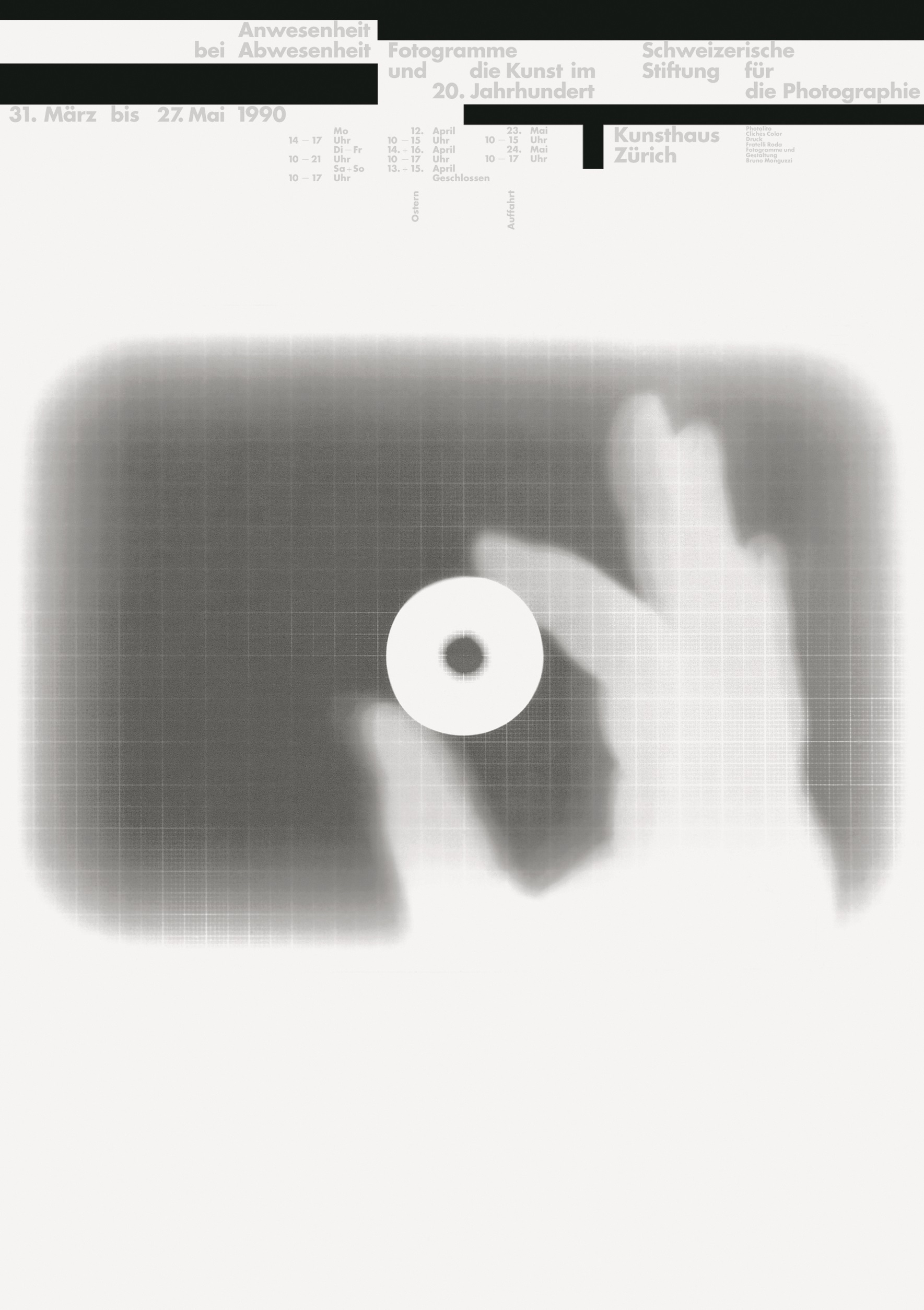
Anwesenheit bei Abwesenheit
© Bruno Monguzzi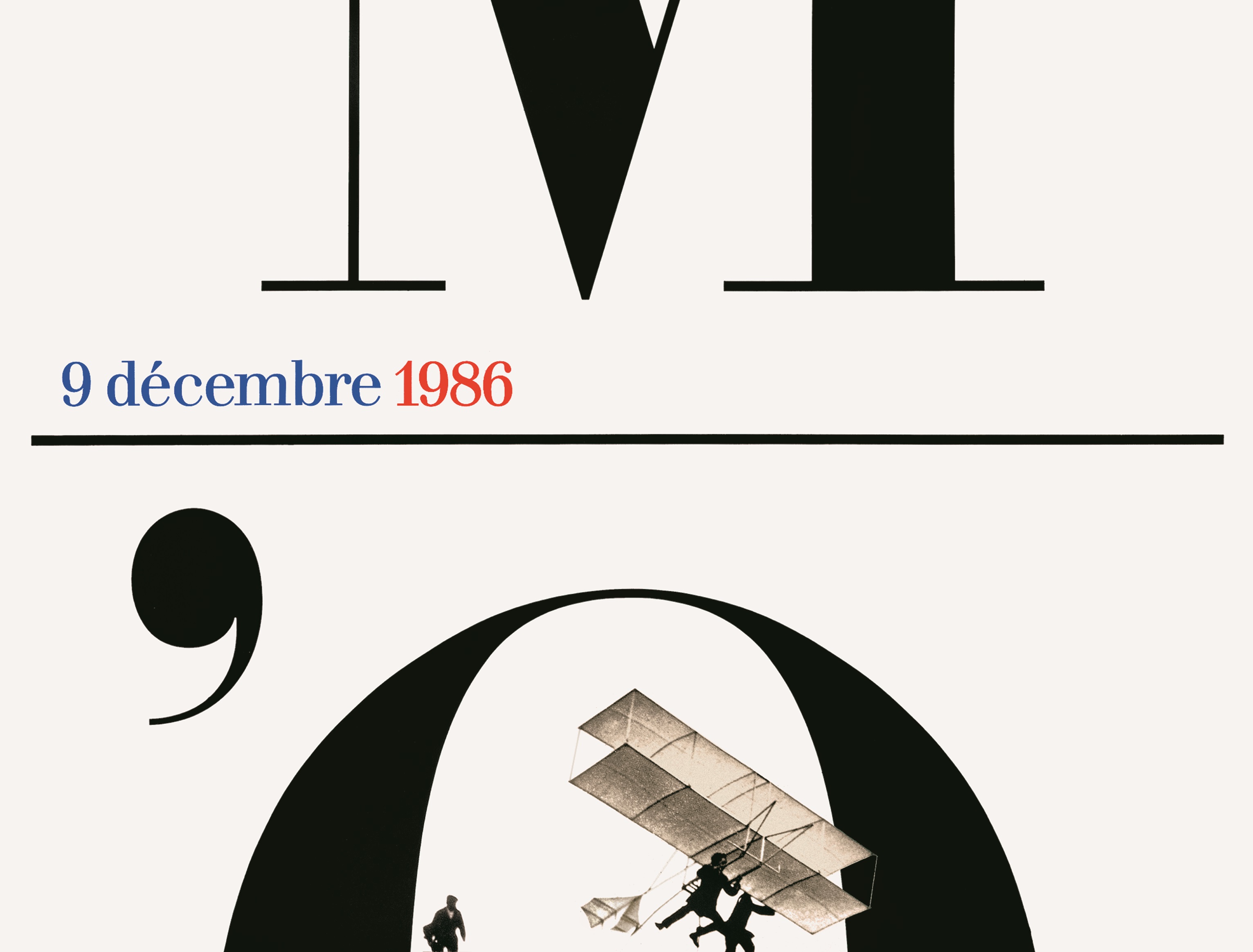
9 décembre 1986
© Bruno Monguzzi
Pirelli, Logo
© Bruno Monguzzi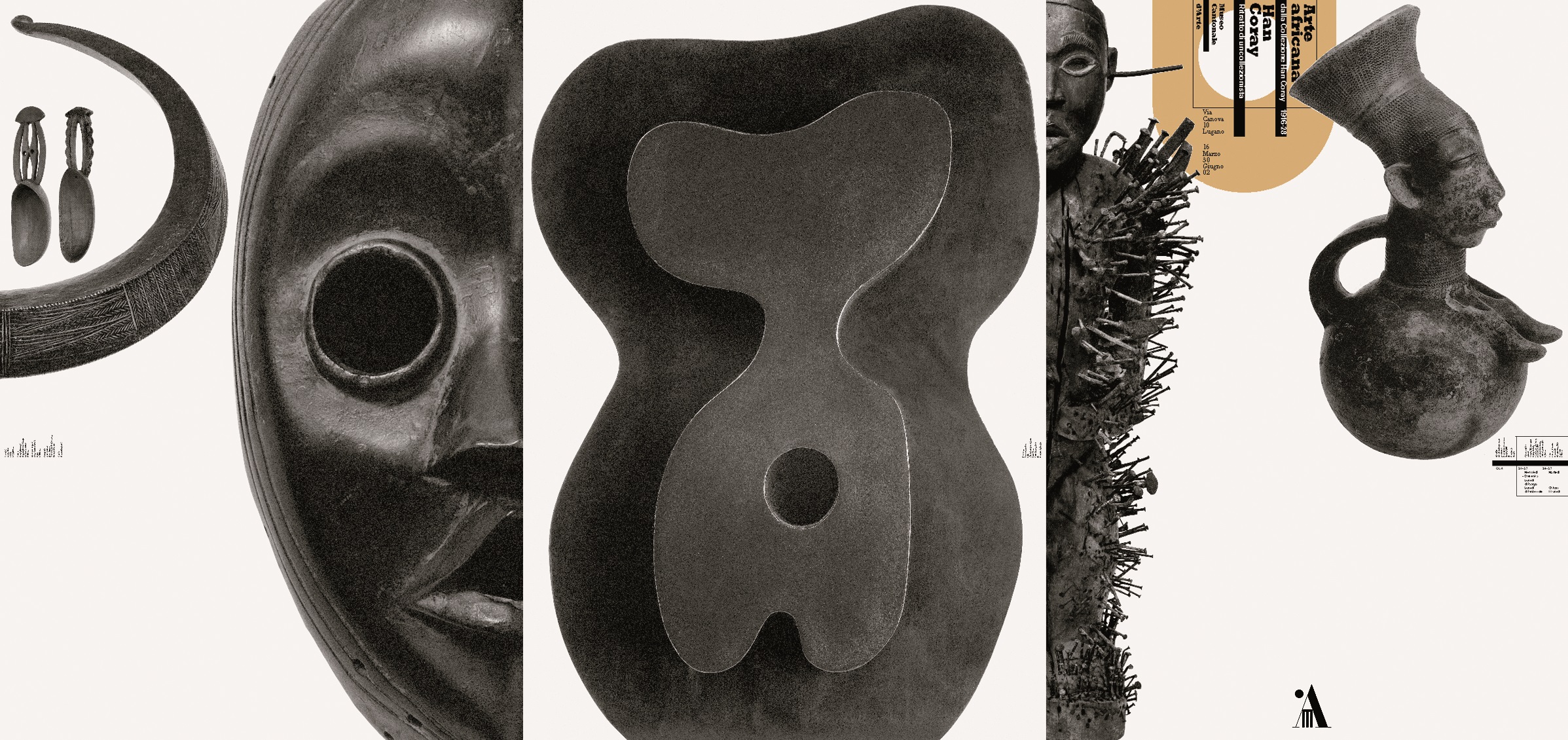
Arte africana dalla Collezione Han Coray 1916-28
© Bruno Monguzzi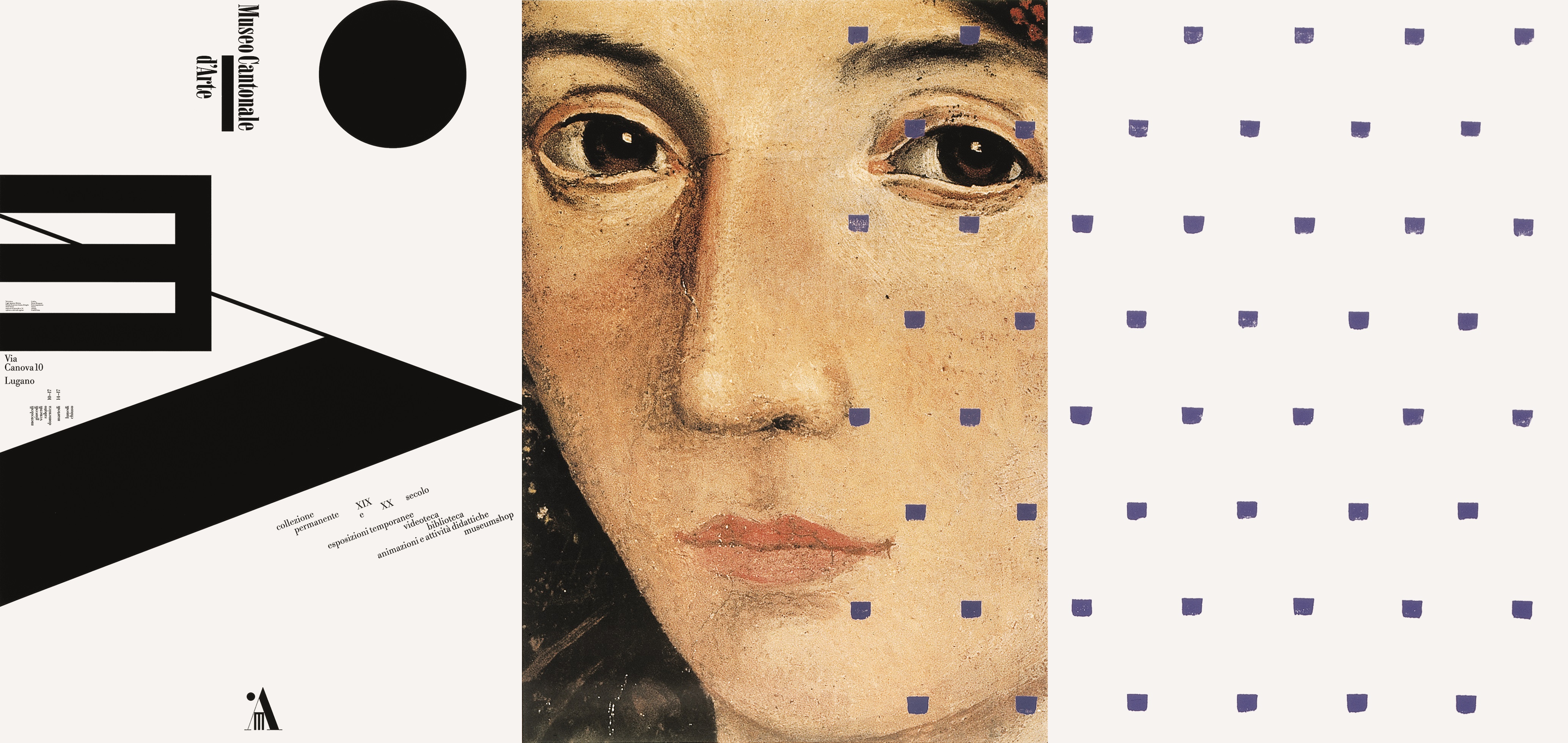
Collezione permanente IXX e XX secolo
© Bruno Monguzzi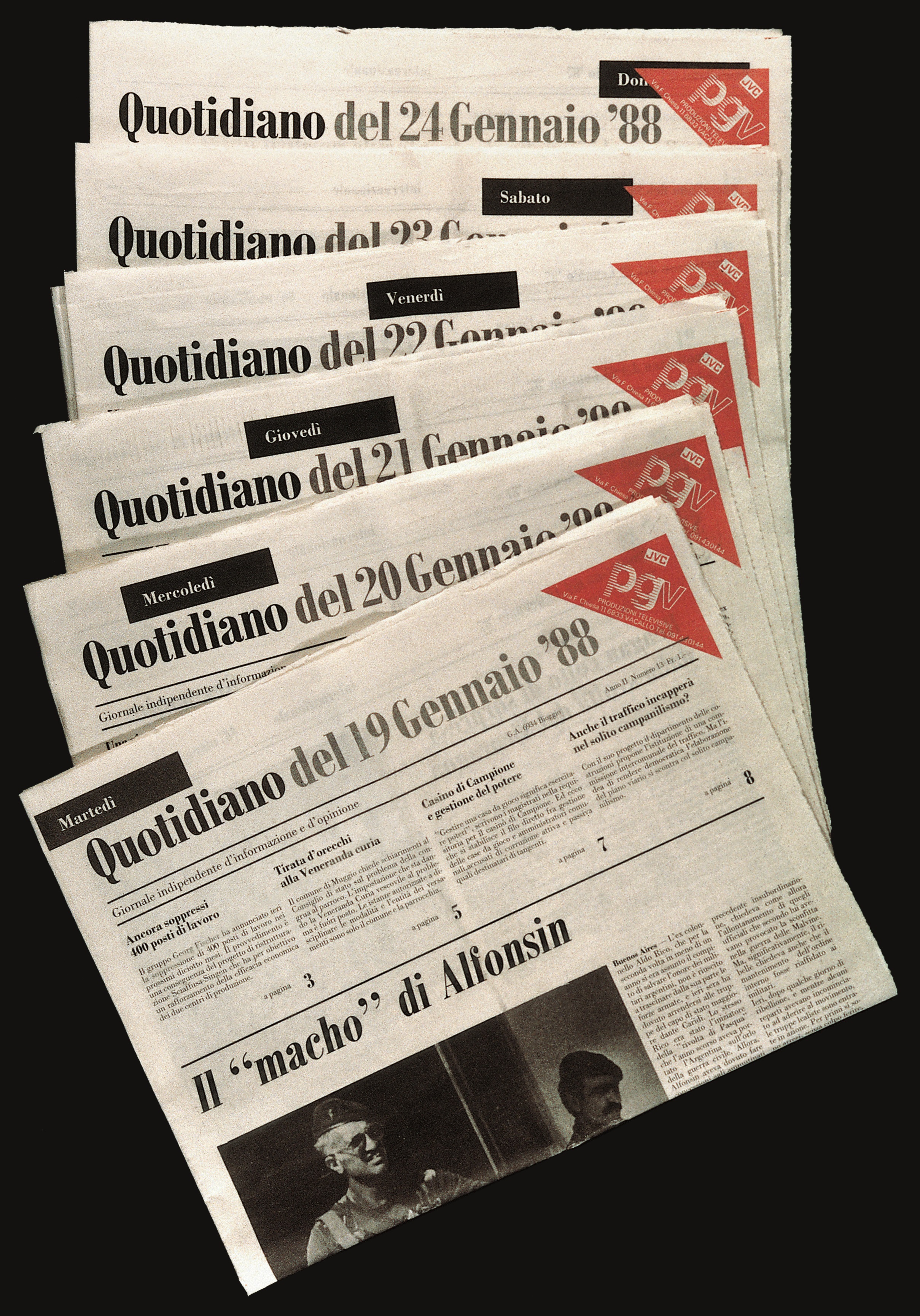
Quotidiano
© Bruno MonguzziAlso unique within Monguzzi’s profession is his talent for not only finding the best solution in terms of content, but also reflecting on it from an economic perspective. His pragmatic approach to the spatial composition of a design enables his posters to function when folded, as flyers or leporellos. He comes up with such solutions when working for various cultural institutions, among others. Bruno Monguzzi is not just a designer: he also acts as an advisor to his clients on his projects. He thinks things through and has an acute eye for the essentials, adeptly combining the roles of thinker and designer. In the seclusion of Meride, where he has lived and worked for many years, he creates graphic works that counter the noisy and sometimes vacuous present with substance and poetry.