
Tilla Theus
Lukas%20Lienhard__(2-250).jpg?w=1024&auto=format)
“Moments like these are a real joy, when project owners sacrifice something today to leave leeway for the future.”
“The fact that nothing existed there before has never bothered me; if anything, it motivates me.”
“I know how to manipulate renderings – perspective, light, focal length. That doesn’t interest me. I want to know whether a space works, whether it’s right.”
An architecture of single-mindedness
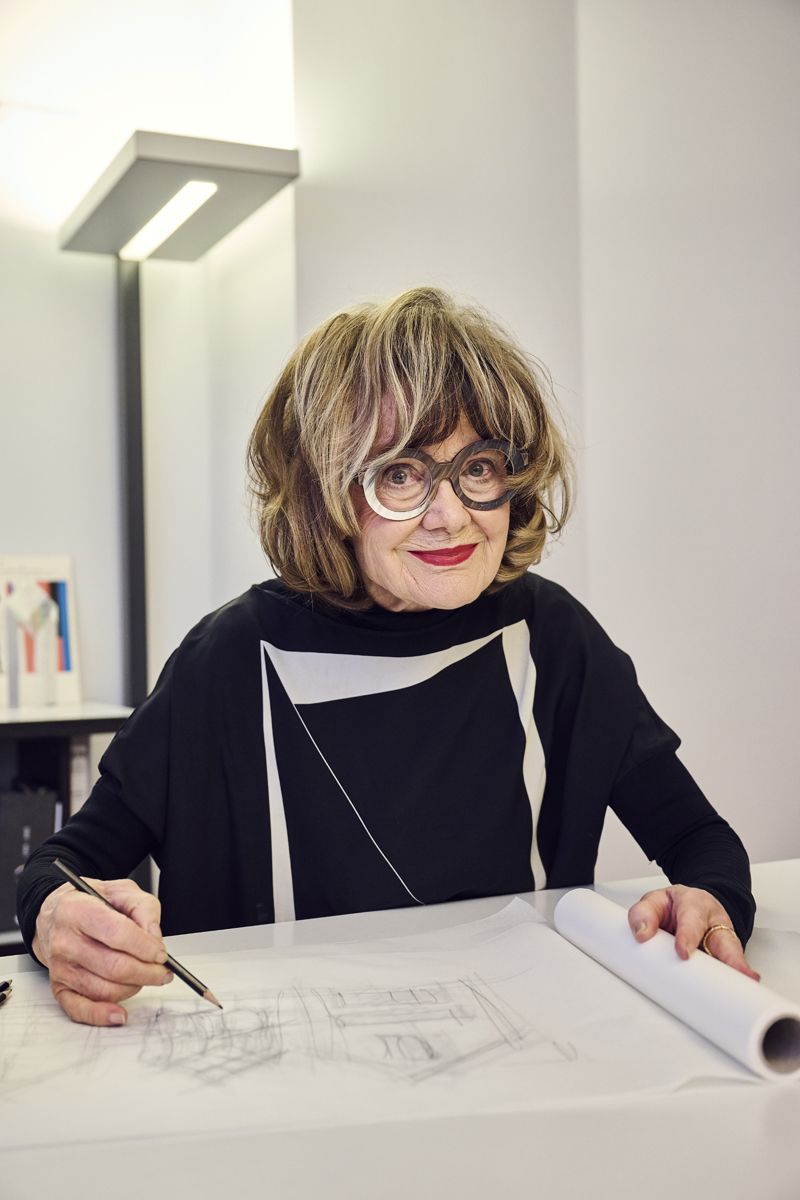
Ever since graduating from the ETH Zurich and immediately opening her office in 1969, Tilla Theus (*1943 in Chur) has pursued an architectural practice that is both self-contained and sensitive. In an environment of male-dominated and hierarchical structures, her choice of subject ran counter to the expecta- tions of society and her family, who viewed architecture as too technical, too demanding and too masculine. Her stubbornness, an inner “granite” inherited from her Graubünden roots, has shaped her resolutely independent approach.
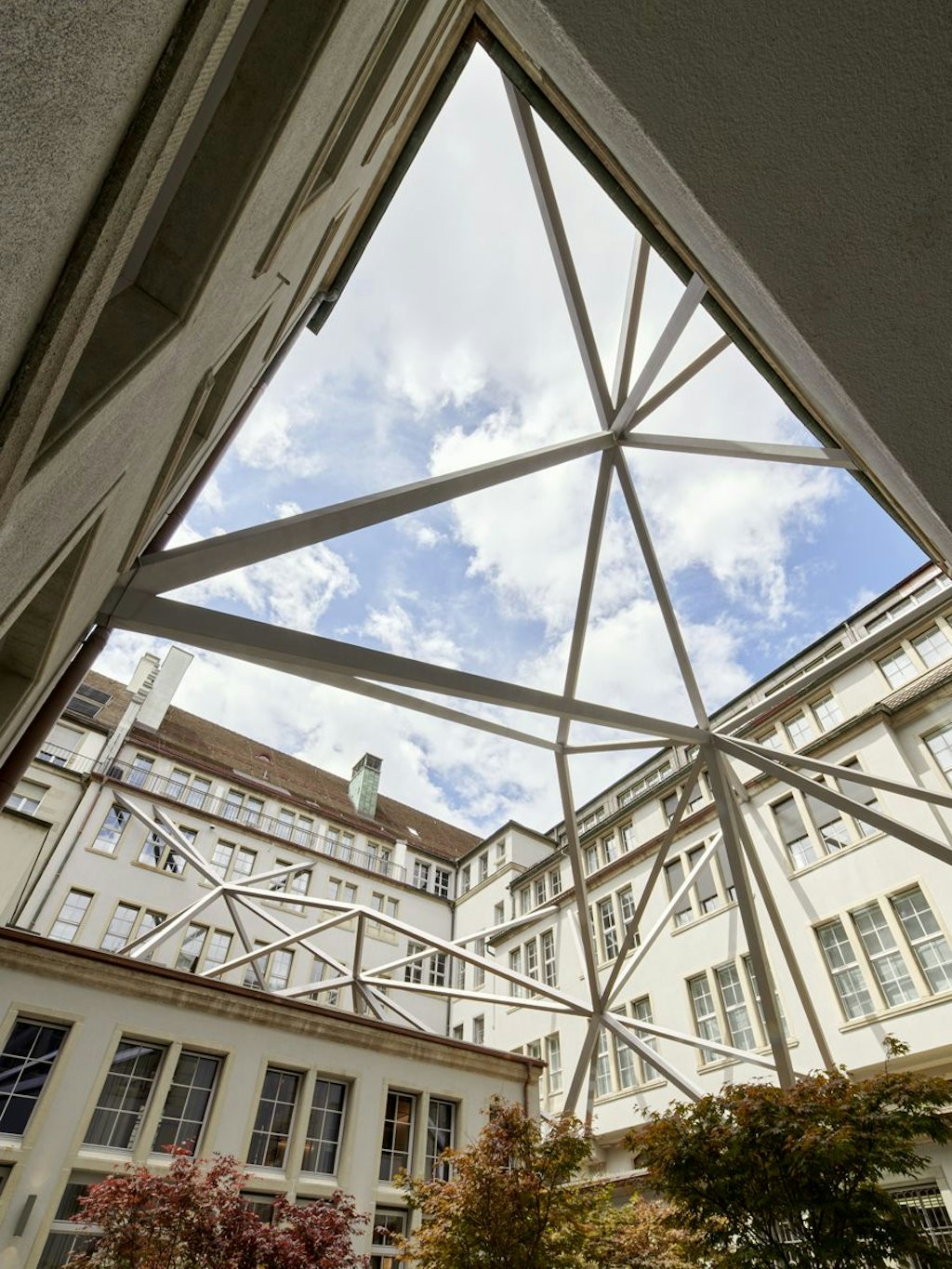
While maintaining the internal logic of the building, with its structures, spatial volumes and specific uses, Tilla Theus is notable for her precocious at- tention to the actual substance of the built heritage. In 1962, the Rathaus- wache lingered on as an isolated fragment of Zurich’s historic centre. Her inter- vention reinvested the building with its original strength, adding a modern extension that echoed the classical colonnade. The mechanically cut stone en- gages in dialogue with the surrounding heritage; the interior is shared between the cantonal police and a wood-lined café opening onto the River Limmat.
A counterblast to functionalist, cold and standardised modernity, her think- ing focuses on an atmospheric concept that explicitly takes account of factors such as light, tactile experience and perception. That interest is especially ap- parent in her social projects, such as the Grünhalde retirement home in Zurich, for which she received the Auszeichnung der Stadt Zürich für gute Bauten in 1980. These sensitive living environments are designed to foster an experience of well-being, dignity and social belonging, and employ an architectural ethic that seeks first and foremost to create warm, human spaces, especially for often marginalised populations such as elderly people and residents of historic centres. In 2021, she was responsible for renovating the 1915 Leuenhof, one of the most iconic buildings on Zurich’s Bahnhofstrasse. Previously the head- quarters of a bank, it was converted to accommodate multiple uses while preserving its architectural quality and historical substance. Her project redis- covered the original structure and repurposed the banking hall, while paying particular attention to its spatial structure and interior flow.
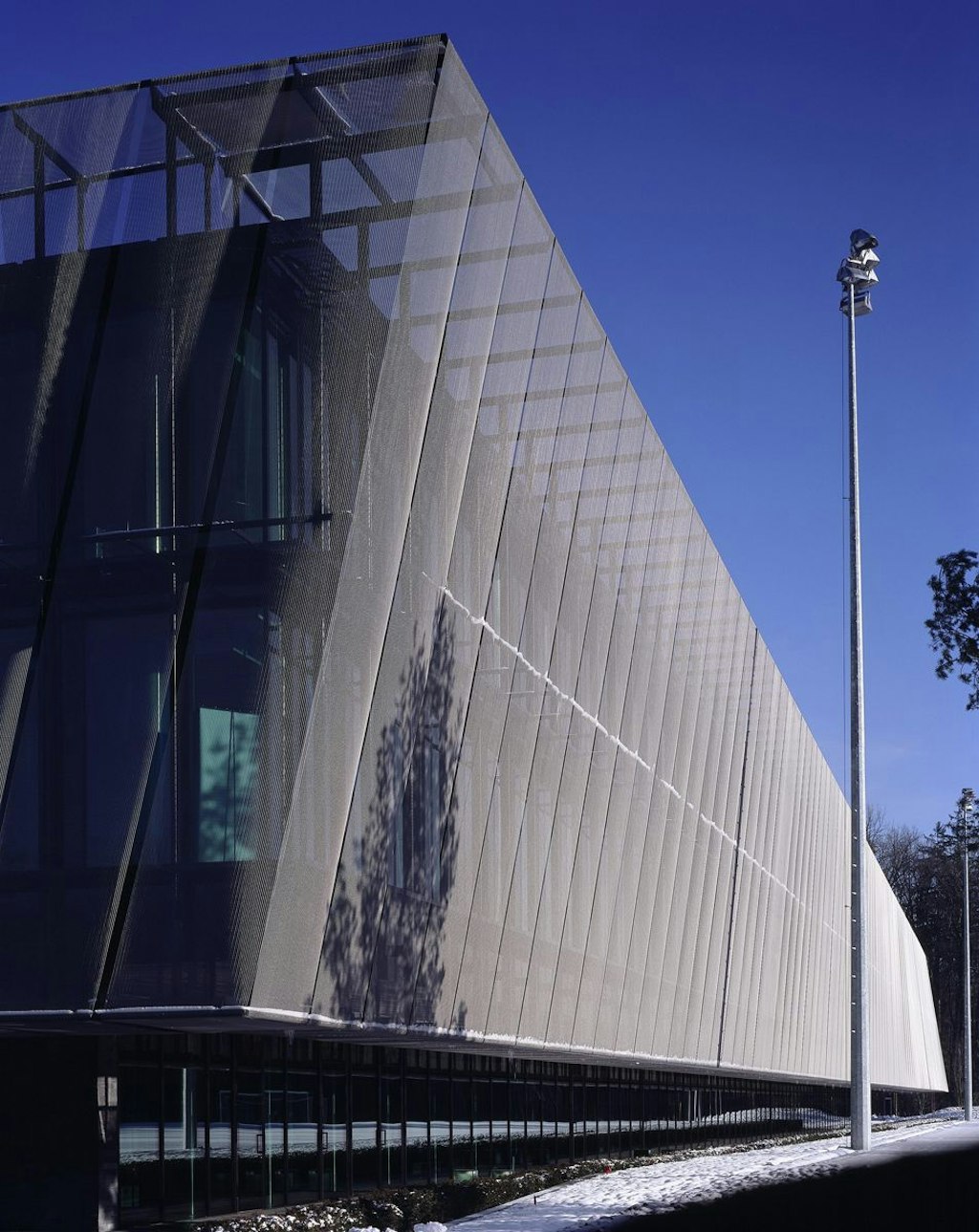
Tilla Theus revealed an interest in monumental projects at an early stage. Her large-scale complexes adopt a defiantly more hybrid, fluid and emotion- al approach, in opposition to spectacular and authoritarian monumentality. She also questions the gendered hierarchies of architecture, as seen in the con- struction of the new FIFA headquarters in Zurich, between 2003 and 2006. Nat- ural light shimmers on the building’s slightly torqued frontage, echoing the light effects created by the surrounding woods. Inside, marble floors and trans- lucent alabaster walls maintain an atmospheric continuity with the outdoors. A leading figure in Swiss architecture, Tilla Theus continues to practise her trade actively, dividing her time between Zurich and Graubünden. She still runs her agency with the same rigour and independence that have characterised her entire career. She received the Bündner Kulturpreis in 2023, in recognition of her work.