The most beautiful Swiss books awarded in 2026 (published in 2025)

13 May 2026

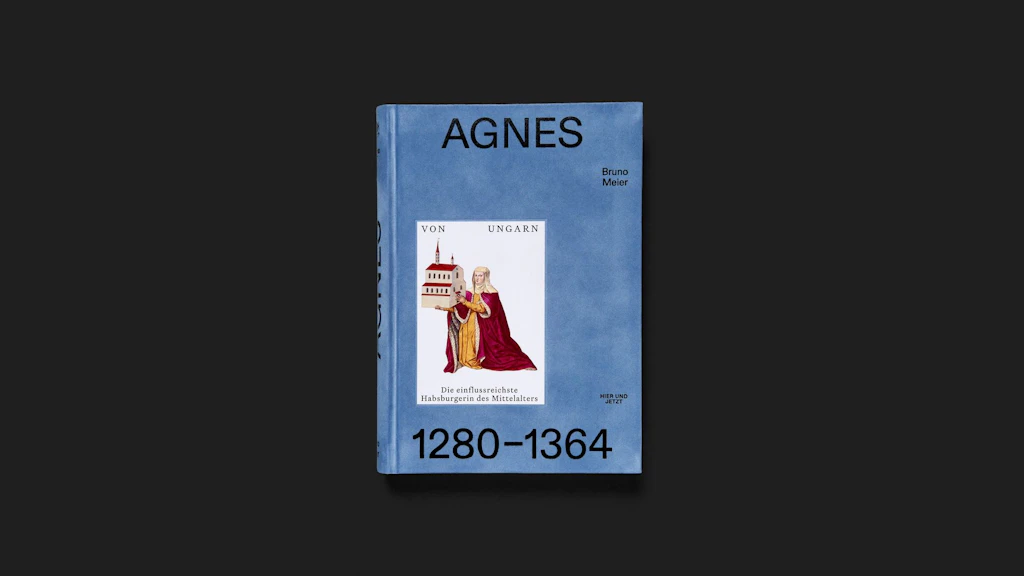
Agnes von Ungarn, 1280–1364. Die einflussreichste Habsburgerin des Mittelalters

The design of this handy biography of the fourteenth-century Habsburg queen Agnes of Hungary combines historical references with contemporary gestures to create a coherent whole. The historical elements include the small book format, the velveteen binding, the glued-on cover image from the sixteenth-century, the bookmark and the occasional positioning of the text area towards the top and centre of the page. With this foundation in place, a series of deliberately incongruous interventions follows. This is programmatically apparent from the start, as the contemporary aspects of the book manifest on the cover in the large sans-serif title ‘Agnes’, while the author’s name is set in small type to the side and the words ‘von Ungarn’ appear in a serif typeface within the cover image of Agnes bearing her dynastic house. Inside the book, space is left at the start of each chapter for the illuminated initial letters typical of the period, but these spaces are left blank. An inserted picture section on coated paper lends a similarly historical air in its layout, but this is confounded by the sans-serif typeface of the captions. The typesetting of the body text, albeit with a few personal twists, creates a strong rhythm, but does not become overwhelming. Although the velvety cover and excellent readability create a direct, almost intimate connection with the reader, the book is a dynamic object whose identity is hard to pin down. This accords very well with the dazzling protagonist, whose ambivalence towards her house and reign is left in limbo in the cover image.

13 May 2026

An Exciting Opportunity Lies Ahead of You

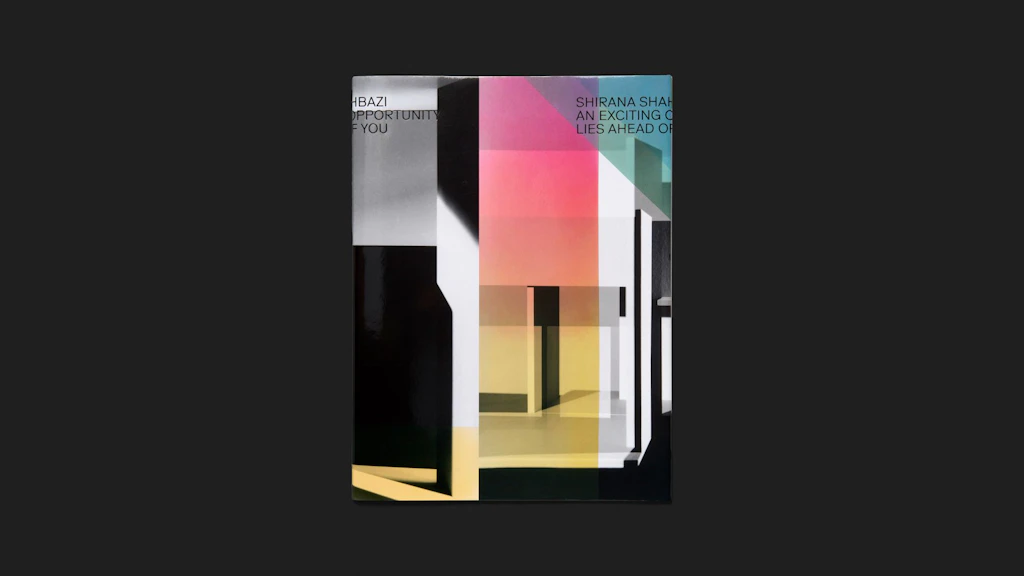
This slim, elegant and dazzling artist’s book on an exhibition by Shirana Shahbazi presents her photographs in an unconventional fashion that allows something wholly new to emerge. A few of the colourful abstract compositions exhibited are transferred full-bleed – some in cropped form – to all 44 pages of the book in such a way that their boundaries and relative proportions disappear, resulting in a continuum of images that calls to mind a hall of mirrors. The sense of confusion is amplified by alternating trimmed pages, fitting into the picture composition of the preceding and subsequent pages so perfectly that at first glance they do not appear to be separate pages at all. As the areas of the full pages covered by the trimmed pages have a semi-gloss finish, the impression of these overlays persists even after turning over the trimmed pages. In this way the photography, design, picture editing and production all come together to create a virtuoso interplay between the exhibition space and the book space that makes it nearly impossible to orientate oneself. This impression is further reinforced on the cover, where the title appears twice running over both front and back covers, almost wrapping around the book. This turns the title’s promise of an ‘exciting opportunity’ ahead into an empty one: rather than forging ahead, the reader is left turning in circles by this hall of mirrors.

13 May 2026

Carl Cheng. Nature Never Loses

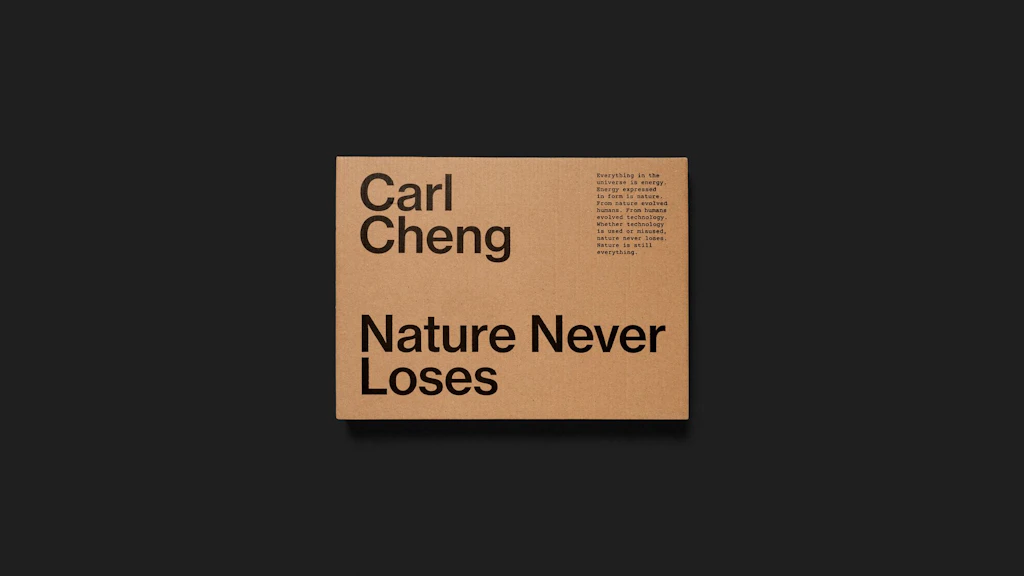
This extensive and hefty landscape-format catalogue serves as a timeline – in book form – along which the work of Carl Cheng can be explored with great freedom. Around 140 works spanning six decades – photographs, artefacts, installations, spatial design sketches, concept artworks, etc. – are presented in chronological order in the main section of the book, generally across one to four pages. The bottom edge of each page features the name of the work and the year of its creation in large Helvetica type, emphasising the passing of time. While this can appear somewhat repetitive when turning the pages, it allows the reader to enter the book at any point. The individual pages contain up to ten mostly uncropped images in an array of sizes and formats, arranged almost like text into continuous columns, always filling the full height of the page, but not always conforming to the column width. Also included are two types of short texts: descriptions of the works (in Helvetica) and the artist’s subjective recollections (in a typewriter font). With no clear order or hierarchy imposed, the materials offer diverse and accessible ways into the works yet do not hide their complexity. Outstanding image processing results in high print quality. Given its size and the landscape format, the book is relatively unwieldy, but a folding cardboard wrapping – the inside of which features three drawings as a striking graphic introduction – provides the volume stability while on a bookshelf.

13 May 2026

Dirty Old River

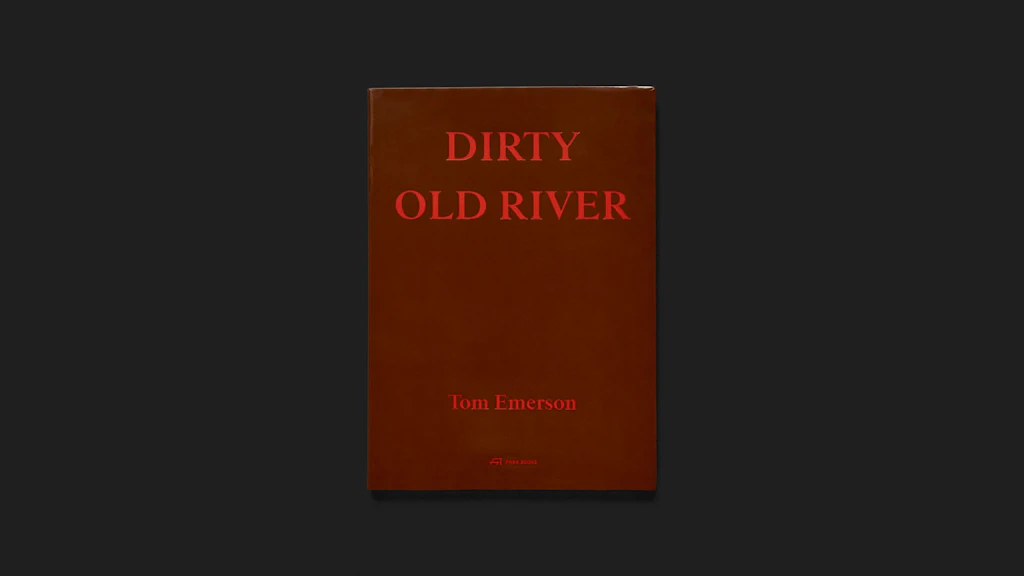
This paperback with a glossy brown dust jacket featuring 12 essays penned by the British architect Tom Emerson over 25 years offers considerable variety within its slim form via diverse layouts befitting the individual texts. It begins with an essay in a single-column layout in a serif typeface, followed by the corresponding four-colour photographs on a coated paper. While the typeface and column width remain constant in the next few essays, black-and-white illustrations are added, initially on individual image pages and then integrated into the text body. In later essays, the text column narrows, at times centred on the page, at times laid out symmetrically across a spread, occasionally with further images added, for example in a margin. The constantly changing form reflects the diverse nature of Emerson’s manner of working and writing; as an architect and a professor, he is always searching for new perspectives and linking together different practices. The subtle homogenisation of the different picture materials is an important design achievement that allows the book to function as a cohesive whole. The brown dust jacket with red writing and the rounded, folded-in flaps give the impression of coming from another era, in contrast to the glossy finish. The brown colour also alludes to the book’s title – a metonym for London taken from The Kinks’ song ‘Waterloo Sunset’. Overall, the initial impression is quite mysterious, setting the tone for the book as a whole, which constantly piques readers’ curiosity, sometimes changing so drastically from chapter to chapter that it might almost be a different book.

13 May 2026

Florian Graf. School Models

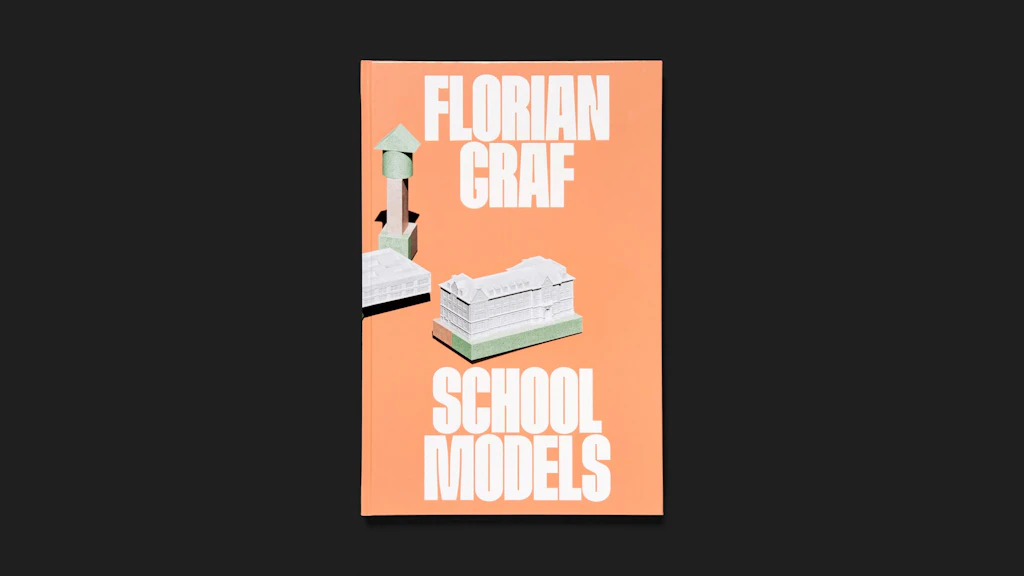
The documentation of Florian Graf’s witty playground sculptures for a Zurich primary school playfully explores the question of the extent to which a book can reflect or even imitate such objects. Graf arranged white limestone models of the three school buildings on green and salmon pink terrazzo blocks, and the book – with its glossy, sharply defined hardcover, using the same three colours – instantly captures the tone and attitude of children: simple, direct and loud. The endpapers then directly reproduce the colours of the terrazzo materials, so that even the white book block can be seen to chromatically echo the limestone sculptures. The front and back covers have a prominently protruding edge, the insides of which feature the contents along all four edges that remain conveniently visible when leafing through the book. The text sections are presented bilingually – German in green and English in salmon pink – with occasional page headings along the edge aligning with the ever-visible contents information. Certain four-colour picture essays detailing, for example, the manufacture, installation and use of the sculptures could perhaps have been more rigorously edited, but they do a good job of conveying the playful theme and wit of the artworks. The book is as idiosyncratic as the sculptures themselves.

13 May 2026

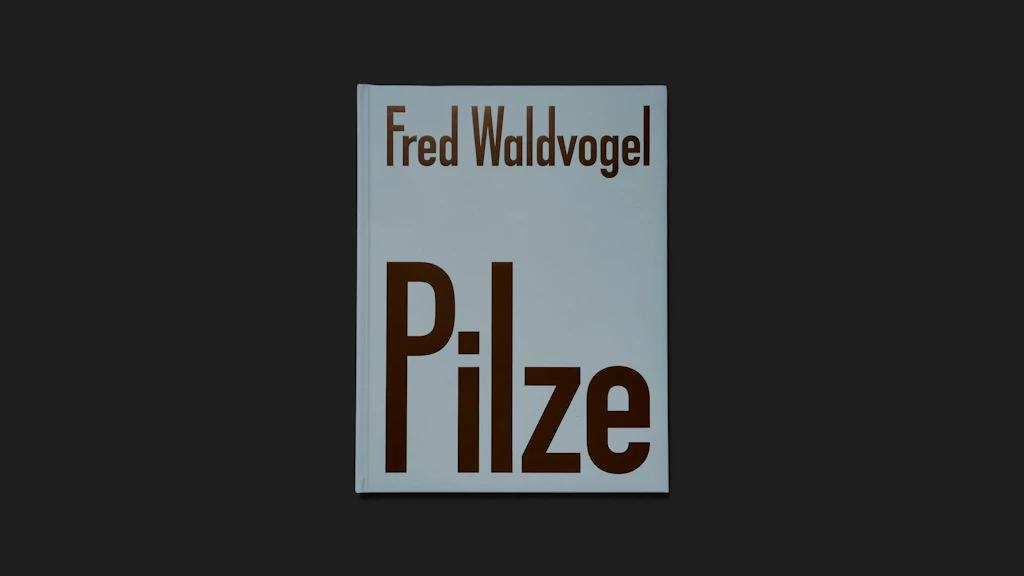
Fred Waldvogel. Pilze

This exhibition catalogue of Fred Waldvogel’s (1922–1997) mushroom photographs brings a lively, contemporary feel to these old – and in some cases familiar – images via a generous high-gloss presentation. Most pages feature one of Waldvogel’s scientific photographic plates in the centre, depicting one or more samples of a single mushroom species laid out in different arrangements. The pictures are scaled in such a way that the mushrooms appear in their actual size, and thus the photographs’ dimensions vary considerably, leaving white margins of differing widths. In combination with the outstanding four-colour printing, this lends a strong aesthetic to the images: the focus is on the delicate forms and spectacular colour gradients of the mushrooms rather than scientific taxonomy and analysis – the purpose for which the photographs were taken and originally published in 1972 in two volumes by Silva-Verlag. Nevertheless, this edition is also interspersed with well-proportioned sections of textual information on isolated pages. The randomness with which these appear means they must be searched out, making the reader play an active role, akin to research. The light-grey padded hardcover with slightly viscous paper and brown lettering is understated compared with the pictures. Yet it remains close to nature with its light-hearted allusions to mushrooms, both in the soft haptics and visually through the narrow letters with tall ascenders that almost look to be emerging from the soil.

13 May 2026

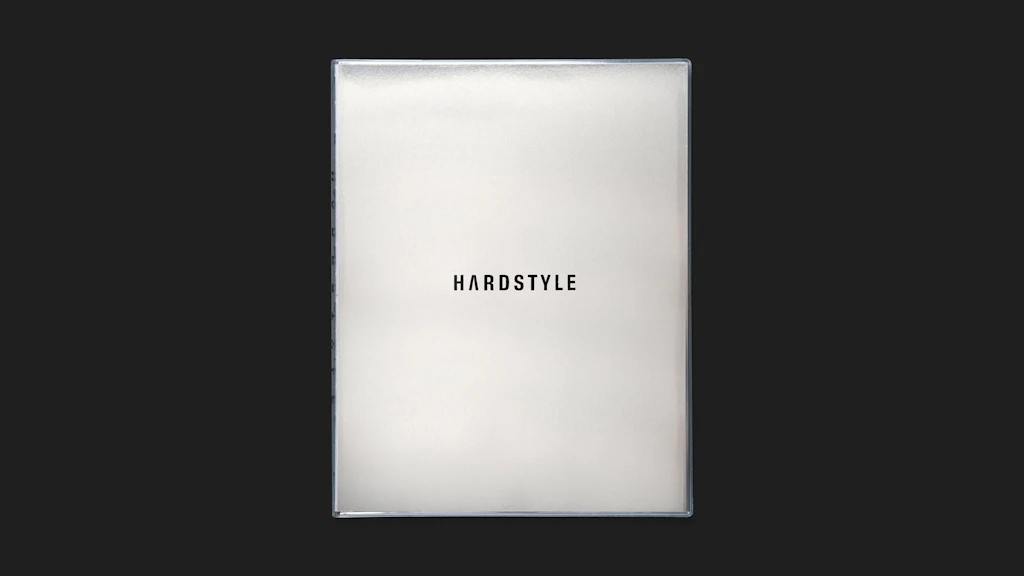
HARDSTYLE

This hefty black-and-silver photobook with a plastic-sealed metal hardcover makes a bold statement about the stylists Peri Rosenzweig and Nick Royal, who fashion the looks for international pop stars. There are close to 200 pages, each generally showing one large photograph – often fullbleed – of a figure in portrait, close-up, posed or silhouette form. Many are wearing idiosyncratic designer clothing that at times borders on disguise, and the use of double exposure and, additionally, frequent overprinting (one photo in silver, one in silver and CMYK) apport to the images a blurry, multilayered appearance that creates a sense of constant motion. Although the recurring use of overlays shapes the book’s aesthetic, it does not feel repetitive; instead it is consistently employed in ever-new variations, so that complexity, movement and rhythm emerge as the guiding editorial principles. The occasional reappearance of individuals fosters mini-narratives that readers can discover for themselves. Certain layouts challenge the book format, with pictures awkwardly cropped or positioned; at times the portrait subjects, with their unconventional poses and gestures, seem to be fighting against the strictures of the book space. Conceived as a portfolio for stylists, the book contains minimal text elements, the typography of which is deliberately understated. The cover, featuring a thick metal plate with a plastic binding, adds to the strong statement being made, even if the liberal use of these materials raises some questions from an ecological perspective.

13 May 2026

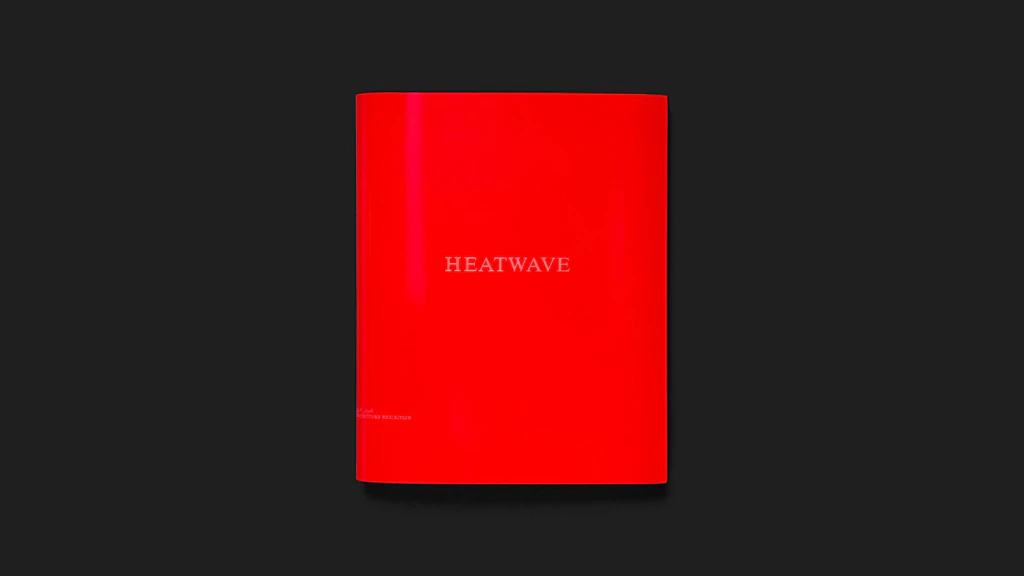
HEATWAVE

This multi-part catalogue for the Kingdom of Bahrain’s pavilion at the 2025 Venice Biennale of Architecture is a brilliantly constructed, dialectical object whose form and materials embody its own impermanence. It takes the form of six booklets on two different types of paper that are nested together. These can be read as continuing chapters of the same book – with English from left to right, and Arabic from right to left – or can easily slip apart. The choice of materials includes a red card cover lacking UV-protection varnish so that it will rapidly fade, while one of the two types of paper yellows quickly due to its high wood pulp content. Aesthetically, the colour alterations are inspired by a photo essay featuring some heavily overexposed images, and the deliberately staged impermanence echoes the exhibition’s theme of anthropogenic climate change. Seven short scholarly texts, three visual essays and two image sections presenting the pavilion convey complexity and a highly intellectual approach, but the object itself also has a strong emotional impact. With the relatively small format, lack of a spine and sparing use of colour, the publication downplays its status as a catalogue; and yet it has its own unique beauty. Perfection and imperfection are for a fleeting moment in harmony.

13 May 2026

Other Voices, Other Rooms

This large-format black-and-white photobook featuring bold red typography translates the complexity and raw aesthetic of a public art project in a Zurich police station, curated by Adam Szymczyk, into a book form that is both conceptually and visually striking. Shortly before the new building’s inauguration, it played host to three days of art installations and performances addressing questions of power and the legitimate use of force. As a permanent reminder of the art event, documentary-style black-and-white photographs from the three days were screen-printed onto the exposed concrete walls of the corridors. This publication now presents new large-format frontal photographs of these wall-mounted images, invariably full-bleed on the pages. Alongside the rasterised screen-prints appear large sections of the concrete walls that visually merge with the pages of the book to give the publication an overall grey impression. The only additions are prominent red page numbers and a few keywords, which sometimes run across a double page in large red lettering, evoking the political urgency of the event. The varied distances to the pictures on the walls create different perspectives, as if the reader were walking through the building, which is no longer open to the public. The constant switching between the documentation of the art event and the screen-printed images on the current-day walls presents a perceptual challenge to the reader. And the fascinating use of multiple perspectives is further heightened by two slim inserted volumes that offer a more conventional presentation of the artworks on view during the three-day event.

13 May 2026

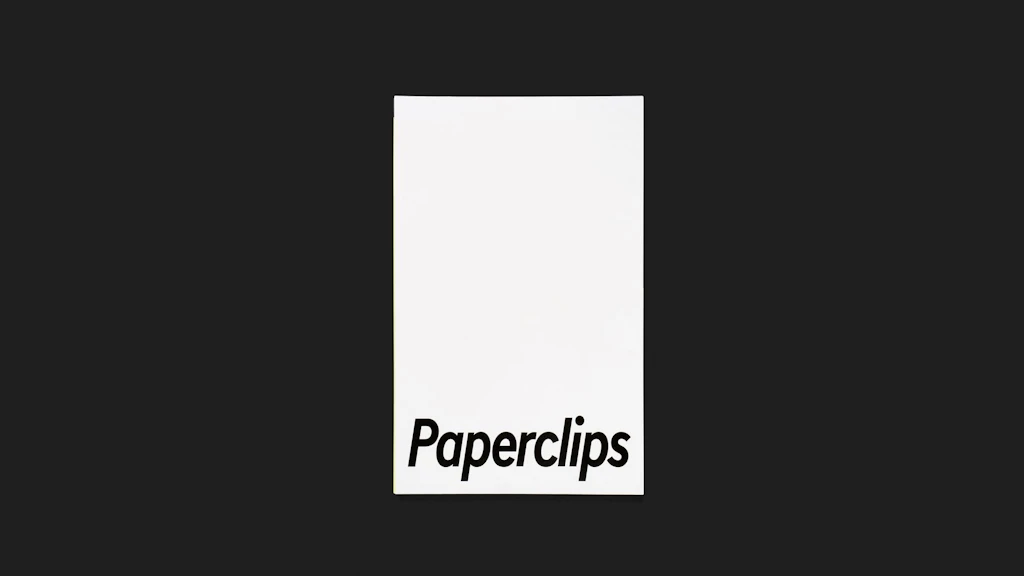
Paperclips

This artist’s book of black-and-white photos of bent paperclips, which takes the form of a large notepad, rests on just a handful of design decisions that make for a very coherent object. Some 70 pages produced using a Risograph printer are stapled together at the top edge, with each showing a large-scale close-up of a manipulated paperclip against a uniform background that fades from black to white. The manifold bends produce filigree abstract sculptures offering fresh surprises on each page that evoke various allusions to art history. While the matt Risograph printing in a strong black displays the background to optimal effect, it creates an interesting contrast to the actual glossy metal of the paperclips. The book block has a thick yellow cover and is wrapped in a black-and-white matt-coated dust jacket containing the title, an essay and the colophon. The three types of paper harmonise extremely well with the binding and choice of typeface, but the ‘pad’ functions as an object even without the dust jacket (and, as a consequence, without any text). It calls to mind a notepad used for doodling during phone calls or meetings, all the more so since bending paperclips is a similarly mindless activity engaged in on such occasions.

13 May 2026

Sheila Hicks. A Little Bit of a Lot of Things

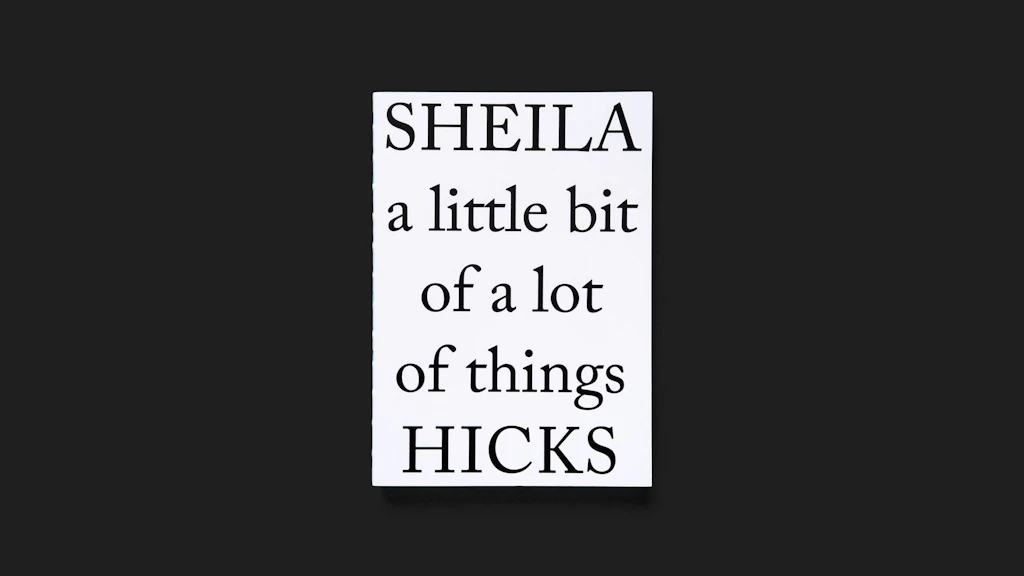
This relatively small-format exhibition catalogue with a black-and-white softcover makes a striking impression with the radical choice to use only centred text, which cascades in ever-different forms and creates varying references to the artist’s textile images and sculptures. The cover, featuring a typographical design that appears rather loud in its simplicity, is followed by a restrained contents page introducing the six sections of the book: a long section of exhibition photographs, a list of works, a curator’s essay, two conversations with the artist and a biography. Following the relatively conventional image section, without any text, the different layouts using centred text begin, arranged into one, two or three columns depending on the chapter. The accompanying images are increasingly integrated until by the end they are – both numerous and small-sized – completely interwoven with the text. While the direct connections between the typography and the textile works are in certain instances rather obvious, taken as a whole they remain engaging thanks to the sheer variety. The consistent combination of a serif typeface for English and a sans serif for German also works well. The typographical treatment of numbers is particularly pleasing, as their status as numbers is called into question and they become strong visual elements: years that are split across two lines, for example, or page numbers in which the digits appear separated by spaces. Overall, it is an experimental and artistically apt design for this kind of work.

13 May 2026

Superior and Inferior. Conversations Among Girls at Middle School

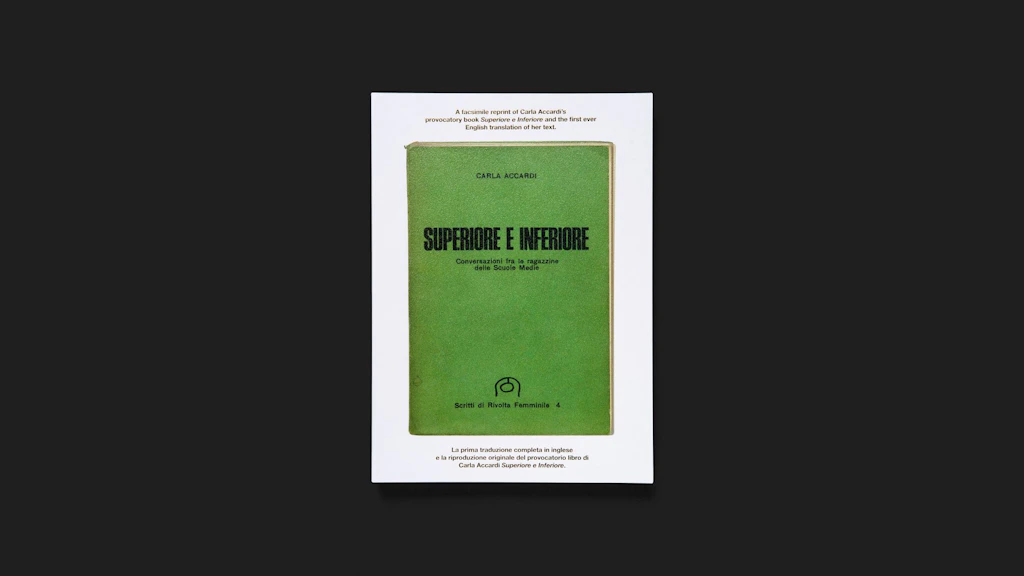
A series of smart design decisions transform this new Italian-English edition of Carla Accardi’s 1972 feminist text into a reader that is as precious as it is practical. The artist was dismissed from her position as a middle-school teacher after holding in-class discussions about how girls face greater societal challenges than boys, and documenting stories from the girls’ daily lives. In her defence, she published this book, which opens with her official dismissal letter and then continues over more than 100 pages with conversations she held with the girls in her classes. The design of this new bilingual edition is enhanced by a page-by-page inclusion of the original in facsimile form, so that to a certain extent this constitutes two books in one. As the new book is slightly larger, the facsimiles of the original pages (in the first part) are surrounded by a white border, with the original paper represented 121 by a fine pattern of lines behind the text. The English translation (in the second part) makes greater use of the page space, and through the use of a larger sans-serif typeface, not yet in existence in 1972, it communicates its historical distance from the original. A similar strategy is also used with the covers, where due to the altered size of the book there is a white border around the facsimile, both front and back, which is then superimposed with explanatory text in the newer sans-serif typeface in gold. While the object as a whole seems to subtly choreograph the idea of a book revival, it is not a mere design exercise; rather it emphasises the importance of the contents, which are still particularly relevant.

13 May 2026

The House of Dr Koolhaas

Through the symbiotic interplay of its editorial and design approaches, this 200-page-plus paperback about an early work by the Dutch starchitect Rem Koolhaas becomes an object alien to the architecture field – a book in the style of a pulp novel. The author (also the co-editor of the series of which this book is the first) investigates the building from a historical and theoretical perspective, but presents her findings as a novelistic narrative about an enigmatic case. The design evokes this approach visually starting with the glossy laminated cover that, with the embossed title and four-colour illustration of the partially illuminated, moonlit house, augurs a feeling of suspense that is typical of the genre. A sensationalist summary on the back cover and promotional quotes further emphasise that the architectural discourse is here being made accessible to a broad public. In comparison, the rather restrained design of the black-and-white interior almost suggests that the cover was meant to deceive, and yet the connection between the two becomes evident through the similar way in which text and images are combined to tell a story. Each page of text is entirely filled and features a single column of text in a serif typeface, and is often complemented by between one and three black-and-white illustrations that offer a fascinating search for connections within art, culture and architectural history. The interplay between text and images throughout is superbly achieved despite the small page format, while constantly changing layouts, with two different image widths and occasional full-page images, ensure that boredom never sets in.

13 May 2026

The Sori Yanagi Appreciation Society

This unconventional book object – with its silver-grey ring binding, slender portrait format and multi-fold card cover, white on the outside and brown on the inside – delivers an unpretentious, enchanting paean to the Japanese product designer Sori Yanagi, making his work accessible to a wider audience outside Japan. Initiated by a product and exhibition designer and a writer from the UK, the project brings together short and extremely short contributions from around 100 experts, presented alphabetically by surname, each on a single page (recto and verso). Many have an image on the front and text on the back, and instead of page numbers, the same number of the contribution appears on both sides of the page. A sense of unity is imposed on the diverse photographs and drawings – many of them objective presentations of Yanagi’s designs, but also snapshots of everyday use – via the coarse screen-printing in silver and a consistent width, the same as the text block. An introductory section on red paper and an index and colophon on blue paper have been inserted into the ring binding before and after, respectively, the contribution pages. The design decisions are few in number but precise, and while the book feels like it is of great value, it is not overdesigned or opulent, but functional and inexpensively produced. The design is also extremely transparent, as the book is nothing more than what it proposes to be: a simple, open compilation of contributions whose ring binder structure renders it expandable. The deliberate functionalism reflects the way Yanagi worked: the everyday functionality of his products was invariably as important to him as their beauty. As such, the book successfully pays homage to the designer through its content, but also as an object.

13 May 2026

The Tinklers Charts and Stories

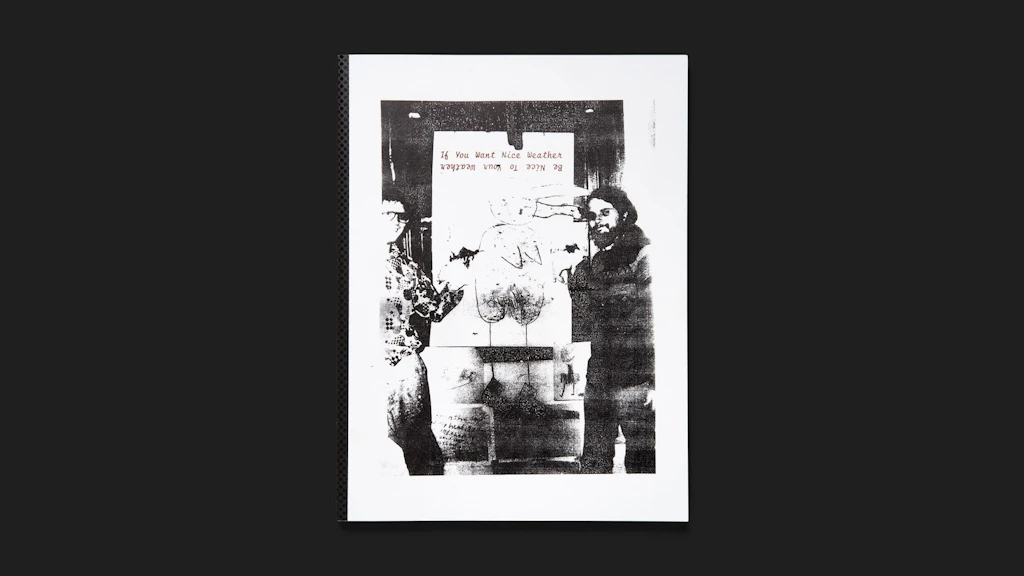
This large-format book, with a white softcover and pages in many different colours, combines five publications by The Tinklers, a US musician and artist duo active in the 1980s, in a carefully considered yet easily accessible reprint edition. Using simple means of reproduction such as mimeographs and photocopiers, The Tinklers created illustrated story ‘books’, which they then ‘performed’ with music and sometimes exhibited as artworks. For this reprint, the techniques, materials, formats and sizes have been standardised. All the pages were photographed, with the drawn and handwritten content transferred to the new paper. The five original books are distinguished by simple, unified title pages and by the varied use of the numerous colour pages in each one, creating a very appealing rhythm. The matt recycled paper, which absorbs a lot of printer ink, is reminiscent of the original reproduction techniques, while the glossy cover with a specially coated spine represents a distinct visual element. The front and back covers feature black-and-white photographs of The Tinklers in performance, offering a concise context for the book’s contents. The photocopied aesthetic of the photos and the overlaid hand-printed stamp drawings pay further homage to The Tinklers’ artisanal productions. In this way, the book does more than rescue a unique artistic practice from obscurity, it also performatively translates it into the present. Despite the strong hand of the designer, everything feels completely natural.

13 May 2026

Unmittelbar, dringend, ungeduldig. Die gestalterische Unerschrockenheit der Keramikerin Elisabeth Langsch

Across nearly 300 richly illustrated pages, this medium-format book with a softcover and colourful dust jacket offers a powerful visual impression of the work of the ceramicist Elisabeth Langsch (1933–2025). Despite having received important commissions for large-scale public sculptures, Langsch remained something of an outsider in the Swiss art world. In this publication, four illustrated essays and a conversation are interwoven with long sequences of images, a catalogue of works and a biography to create a wide-ranging portrait that, nevertheless, refrains from establishing a clearcut image. Rather, the perspective on the works is continually shifting – between finished sculptures, the artist at work, exhibition views, formal details, material surfaces and colours – and the often trimmed and cropped images obscure the works’ relative scale. While in the essay sections images are frequently cut out into the shapes of the often colourful objects, with the unusually large type flowing irregularly around them, the interspersed picture sections are presented full-bleed with numerous fold-out pages, resulting in a richly coloured pictorial space in which readers can lose themselves. The design plays with contrasts such as professional versus amateur and control versus freedom, dichotomies which were also characteristic of Langsch’s work. At times, the cut-out pictures have to jostle with the text for space, echoing the way in which the ceramicist struggled for artistic recognition, with her works often dismissed as ‘only’ handicraft. Although the book strives to rehabilitate Langsch’s reputation, it does not glorify her, instead allowing readers to draw their own conclusions about her multifaceted practice.

13 May 2026

Words Rather than Pictures

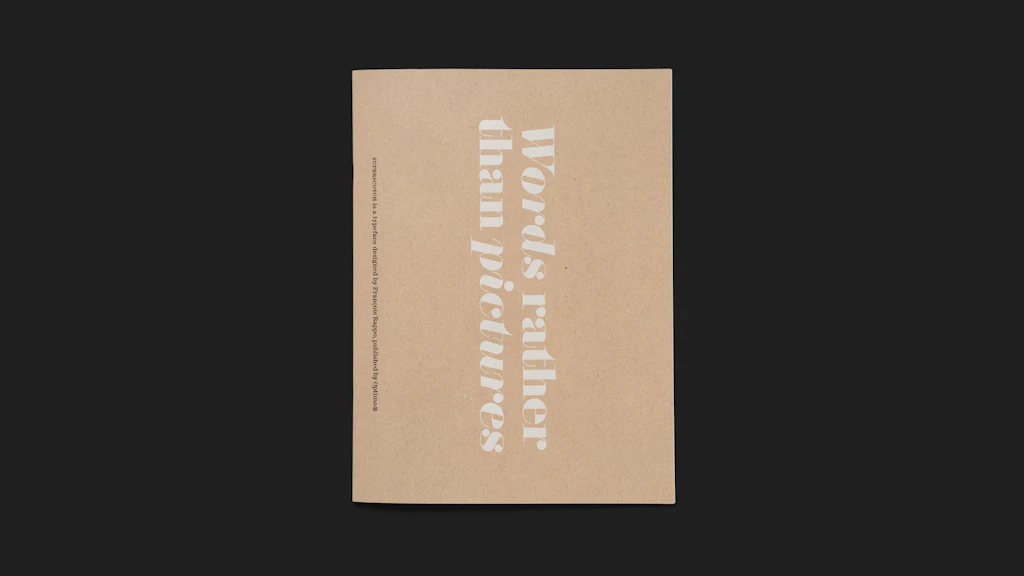
This spectacular type specimen book, consisting of 48 very large pages, not only presents the new SuperScotch serif typeface developed by François Rappo but also offers a successful homage to the art of printing. The volume’s letterpress printing – which necessitated a great deal of handcraftsmanship – alludes to the typeface’s historical inspiration in Scottish typography of nineteenth-century travel publications. Six different paper types – some of which include cotton fibre – occasion an intriguing haptic diversity, and both the ink application and the impression left by the printing plates confer to the sometimes huge characters a tangible impact. The texts, consisting of extracts from two books by John Baldessari, printed in very strong black and in varying layouts, create an expressive effect; yet they are executed in a thoughtful and controlled fashion and draw the reader in. The design manages to achieve a sense of unity, despite the numerous changes in paper, layout and letter size. The landscape-format screen-printed cover has the air of a bonus feature and is reminiscent of the semi-card used in the printing industry to separate stacks of paper. Treading a fine line between historical reproduction and new creation, the publication accurately reflects the identity of the typeface.