
Fabrice Gygi
BAK%20OFC%20Yumna%20Al-Arashi%2C%202026.jpg?w=1024&auto=format)
“I no longer wish to look at this world, to gaze upon it with a critical eye; I long instead to flee, to find a way out.”
“Even the sculptures: they were always nomadic structures. Although they were the structures of power, you could load them onto a truck and move them around, you could set up a kind of camp site.”
“Without really anticipating it, I think what has long fascinated me about geometry is also what I wish to get away from.”
An aesthetic of escape
Joel%20von%20Allmen.jpg?w=1024&auto=format)
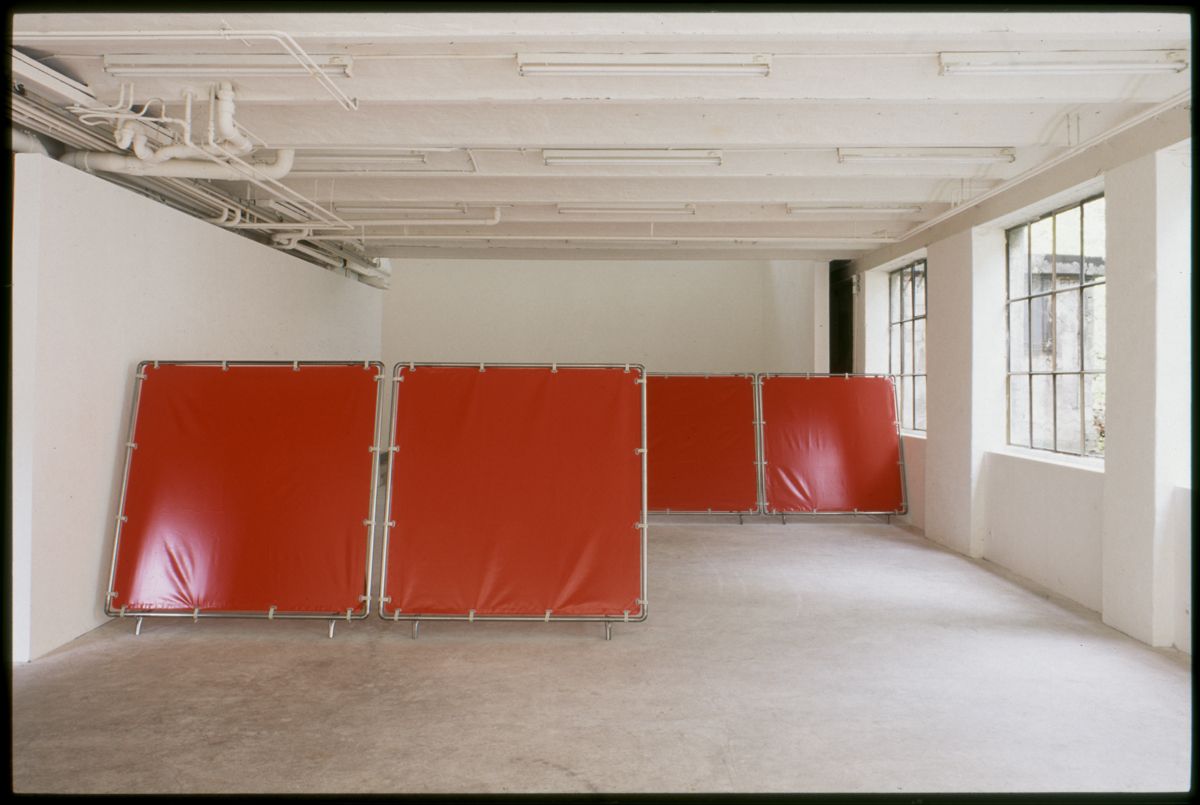
Ever since the 1990s, working amidst Geneva’s alternative scene and community squats, Fabrice Gygi (*1965 in Geneva) has been developing an aesthetic of escape. His sculptures, along with watercolours, prints, performances, tattoos and jewellery, interrogate the mechanisms of authority while borrowing from its register: tarpaulins, storage containers, tents, sandbags, fastenings, anti-tank defences, wire mesh, straps. These are transformed by enlargement or by combinations of different worlds, as with Vigie, a 12-metre-high surveillance tower reminiscent of the watch towers of high-security prisons. It was presented at the 25th São Paulo Art Biennial in 2002, where Fabrice Gygi was representing Switzerland. With its associations of both prison and performance, the work hijacked the codes of a surveillance society, echoing the city in which it was shown: a metropolis plagued with violence born out of vast social inequality.
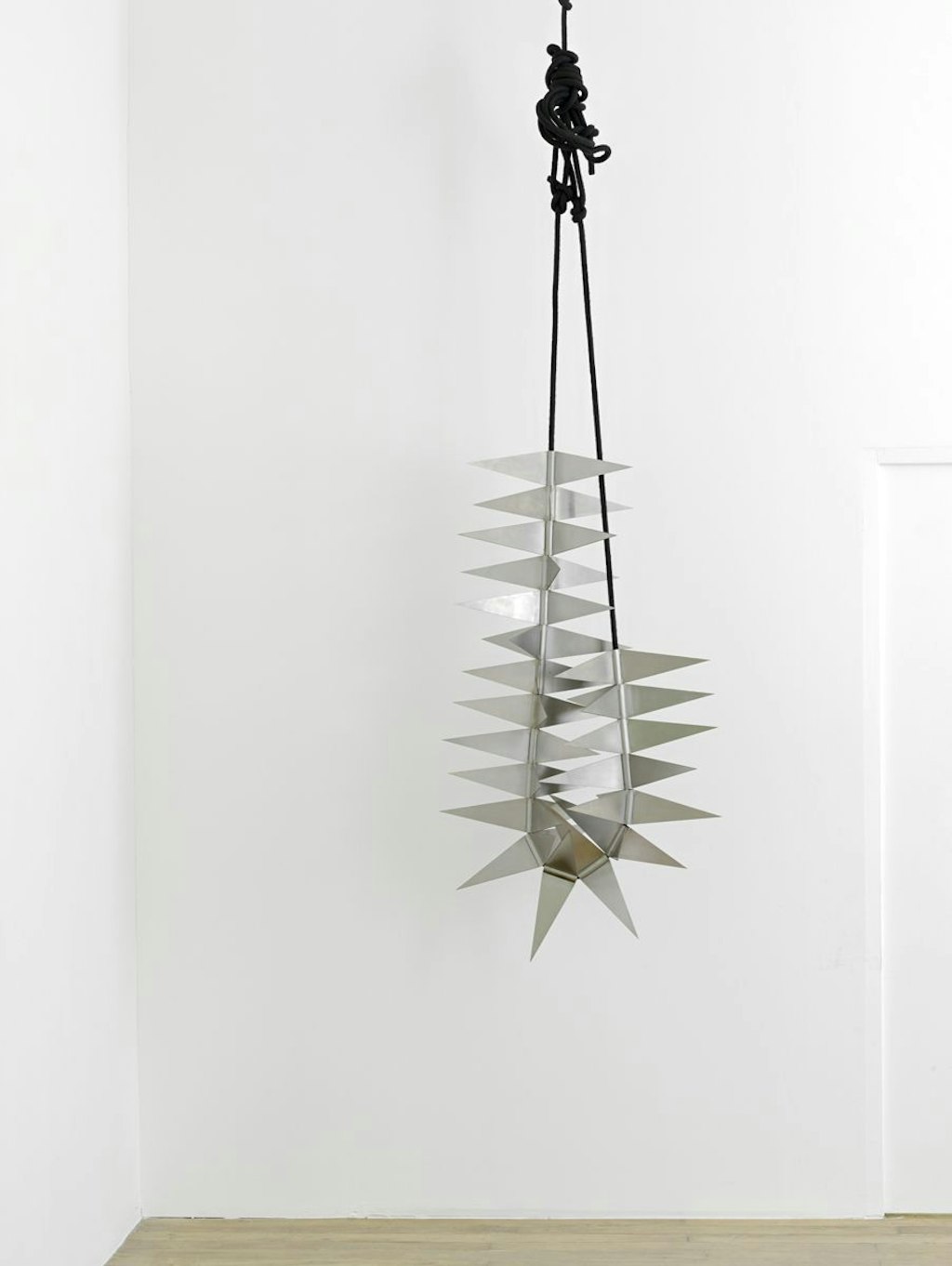
Using materials connected to emergencies, Fabrice Gygi emphasises the idea of nomadic and fragile individuals moving constantly around the world. During a solo exhibition at the Swiss Institute in New York in 2001, his installa- tion recreated a voting booth reduced to the essentials: a provisional con- struction that might be set up in a village hall. These reimaginings invested his work with a powerful political overtone. For the 53rd Venice Biennale in 2009, where he was once again representing Switzerland, Fabrice Gygi arranged two rows of padlocked metal cages in the church of San Stae: storage for emer- gency supplies of the type found in military commissaries or civilian food stores in times of crisis. The installation explored the location’s dual safeguarding role: as both protected historic monument and potential refuge for civilian populations.
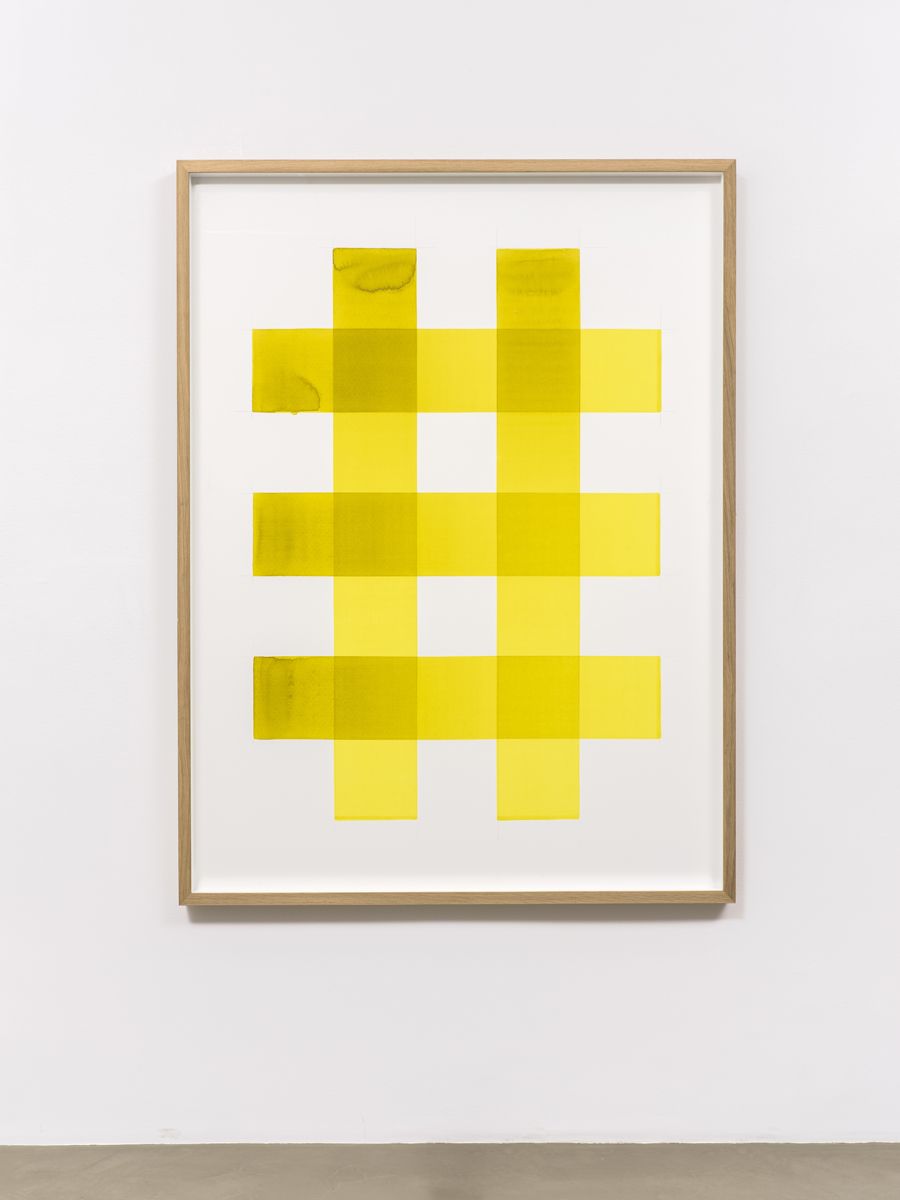
Today, having put his installation practice on hold, the artist pursues this iconographic interest in grids through the medium of watercolours criss-crossed by wide, translucent straight lines. These works, reproduced in various formats and colours, locate the artist’s approach within a meditative discipline which, here, is suggestive of psychological rather than physical emancipation.
Florian%20Kleineffen.jpg?w=1024&auto=format)
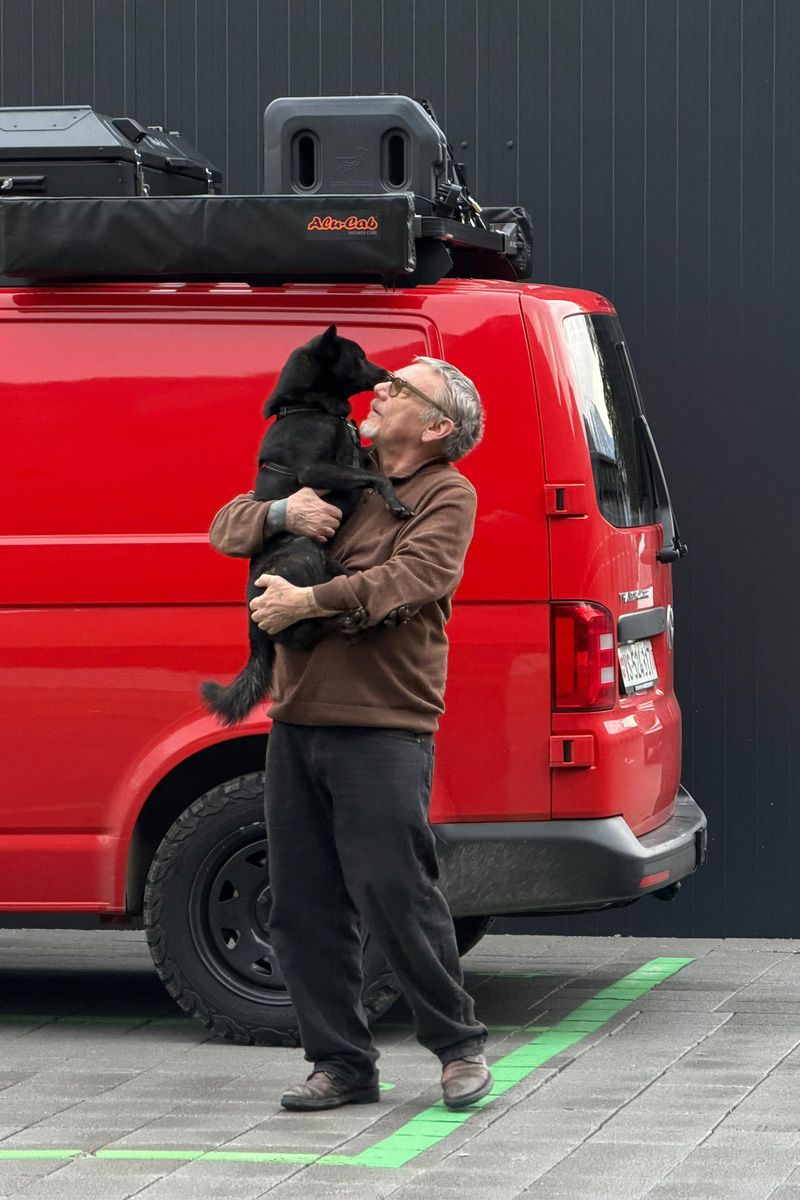
Living between Valais and Geneva, Fabrice Gygi still maintains the close connection with the land and nature that, in his youth, had taken him on a number of solo treks in the far north of Canada. In winter 2026, he will be on the road again. Fabrice Gygi is thus engaged in a quest that runs through all of his work: a search for liberty and a compulsion to escape the confines of a self-imposed prison. Fabrice Gygi received the Prix de la Société des Arts de Genève in 2021. He is a graduate of the École des arts décoratifs and the École supérieure des arts visuels de Genève HEAD. He teaches at the École cantonale d’art de Lausanne ECAL and at HEAD. He has featured in large- scale solo exhibitions in Switzerland and abroad, notably at MAMCO, Geneva, the Centre Culturel Suisse, Paris, and Le Magasin – Centre national d’art contemporain, Grenoble. He has also been involved in major group exhibitions at the Palais de Tokyo, Paris, Museum Ludwig, Cologne, and MoMA PS1, New York. His works can be found in the collections of numerous institutions, including MAMCO, Geneva, M HKA, Antwerp, and the Musée National d’Art Moderne, Centre Georges Pompidou, Paris.
At the end of 2026, a solo exhibition devoted to him will open at the Skopia gallery in Geneva.